Rosulate viper's bugloss
Echium rosulatum
Description
Rosulate viper's bugloss (Echium rosulatum) is a herbaceous plant species belonging to the Boraginaceae family. Known for its distinct growth pattern and ecological resilience, this plant is increasingly recognized for its potential as an agricultural crop in arid and semi-arid environments, particularly for apicultural purposes.
The plant is native to the Mediterranean basin, with its primary distribution centered in the Iberian Peninsula. It naturally thrives in open, rocky, and sandy habitats, showing a strong adaptation to low-nutrient soils and prolonged dry spells. In agricultural settings, it serves as a robust candidate for lands that are considered marginal for more intensive crop production.
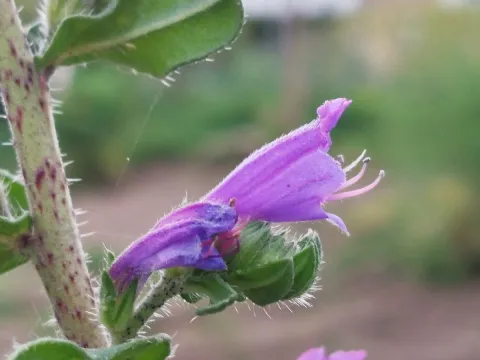
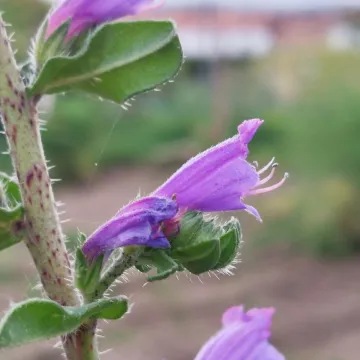
Botanically, Echium rosulatum is characterized by a prominent basal rosette of leaves and sturdy, bristly stems. The flowers are typically arranged in dense, spike-like inflorescences and are highly attractive to bees and other pollinators. The plant exhibits structural adaptations, such as trichomes (small hairs) covering its surface, which effectively minimize water loss during high-temperature periods.
Regarding agrotechnology, the species requires excellent soil drainage to prevent root rot. It performs best in sunny, exposed locations with neutral to slightly alkaline pH levels. It is remarkably low-maintenance, requiring very little fertilization or irrigation once established. Cultivation involves careful site selection to avoid waterlogged conditions, which are the primary constraint for healthy development.
The main commercial utility of Echium rosulatum lies in its role as a high-quality nectar source for beekeeping. Additionally, it is utilized in landscape conservation and environmental restoration projects due to its ability to stabilize loose, rocky soil. While it is generally hardy, growers should monitor for common pests of the Boraginaceae family, such as aphids, and manage fungal pathogens that may arise in damp, poorly ventilated microclimates.
Photo gallery