Sand viper's bugloss
Echium sabulicola
Description
Sand viper's bugloss (Echium sabulicola) is an herbaceous perennial or biennial plant belonging to the Boraginaceae family. This crop is characterized by high ecological plasticity and the ability to grow on poor, sandy substrates, making it a promising candidate for phytomelioration and introduction into agricultural systems on low-productivity lands.
The plant originates from Mediterranean and Black Sea regions. Its natural distribution includes sandy dunes, dry steppes, and open slopes. The culture successfully adapts to arid climates, demonstrating exceptional drought resistance, which allows it to be used as a key component for stabilizing shifting sands and preventing soil erosion in degraded areas.
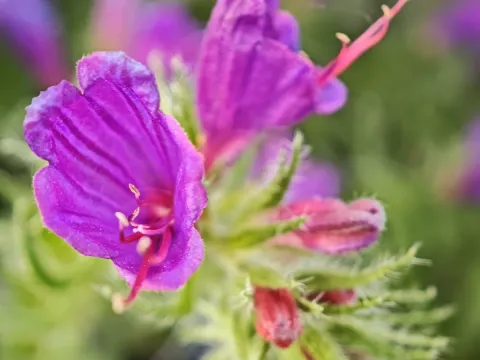
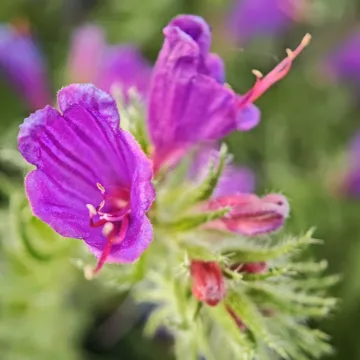
Botanically, sand viper's bugloss is distinguished by the rough pubescence of its stems and leaves, as well as distinctive bright blue or purple flowers arranged in spike-like inflorescences. The taproot system penetrates deep into the soil, ensuring the plant maintains hydration in extreme environments. The extended flowering period contributes to active biomass accumulation and serves as an important resource for pollinators.
The agrotechnics of growing sand viper's bugloss rely on its minimal soil fertility requirements. The plant does not tolerate waterlogging, preferring well-drained, sandy, and loamy soils with a neutral or slightly alkaline pH. Sowing is best performed in early spring, taking advantage of the high germination energy of the seeds and their ability to remain dormant in the soil until optimal environmental conditions are met.
The economic significance of the plant encompasses several key areas:
- Utilization as a valuable late-summer honey plant with high sugar content in its nectar.
- Application as a forage crop in regions with extremely dry climates.
- Technical use for the reclamation of disturbed lands and sand quarries.
- Extraction of bioactive compounds from seeds and aerial parts for pharmacological purposes.
Among the primary phytopathological risks, the plant is susceptible to powdery mildew under conditions of excess humidity and can be affected by specific types of weevils that damage growth points. To protect crops, integrated pest management practices are applied, including crop rotation and density control, which help avoid mass outbreaks of pests without relying heavily on synthetic chemical pesticides.
Photo gallery