Edgeworthia gardneri
Edgeworthia gardneri
Description
Edgeworthia gardneri is a robust shrub belonging to the Thymelaeaceae family. It is recognized primarily for its ornamental value in mild climates and its significant utility as a source of high-quality vegetable fiber extracted from its inner bark.
The plant originates from the Himalayan foothills, spreading across regions of Nepal, Bhutan, and China. Its natural habitat is characterized by humid mountain forests, which dictate its biological preference for shaded, moisture-rich environments and well-protected sites.
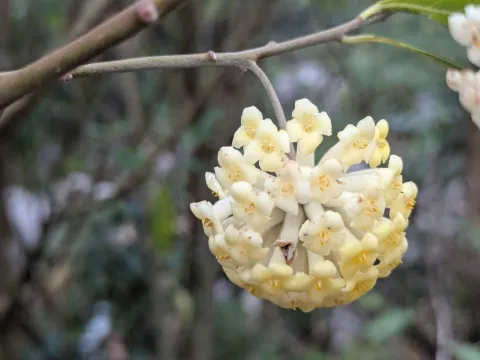
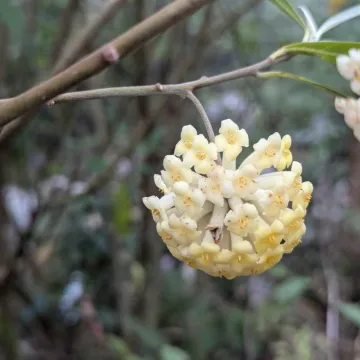
Botanically, it is defined by its supple, branched stems and terminal clusters of fragrant yellow flowers. The foliage is typically lanceolate and deciduous in cooler environments. The fiber content in the bark is unusually high, making it a valuable resource for traditional paper crafts.
Agronomic requirements include deep, organic-rich soil with excellent drainage properties. While it thrives in partial shade, it requires sufficient air circulation to prevent fungal growth. It is not frost-hardy, requiring strict temperature management in regions where winter temperatures drop below freezing.
- Consistent moisture supply during the growing season.
- Application of organic mulch to keep roots cool.
- Occasional pruning to improve bark quality and branching.
- Protection from direct intense sunlight.
The primary economic use of Edgeworthia gardneri is the production of specialty paper. The fibers are extremely long and strong, providing a product that is resistant to tearing and degradation. This makes it ideal for archival documents, security paper, and high-end artistic applications.
Pest management focuses on monitoring for aphids and spider mites, which can proliferate in enclosed or poorly ventilated environments. Pathological issues are generally restricted to root rot if irrigation protocols are not followed, necessitating a balanced approach to water management.
Photo gallery