Edmondia sesamoides
Edmondia sesamoides
Description
Edmondia sesamoides is a perennial flowering plant belonging to the Asteraceae family. Often referred to as one of the true "everlasting" flowers, it is prized for its ability to retain its form and color long after the plant has been harvested, making it a staple in the dried flower industry.
The species is native to South Africa, specifically within the Cape Floristic Region. In its natural habitat, it thrives in sandy, nutrient-poor, and well-drained soils, typically found on mountain slopes. This evolutionary background makes it an excellent candidate for xeriscaping in regions with similar Mediterranean-type climates.
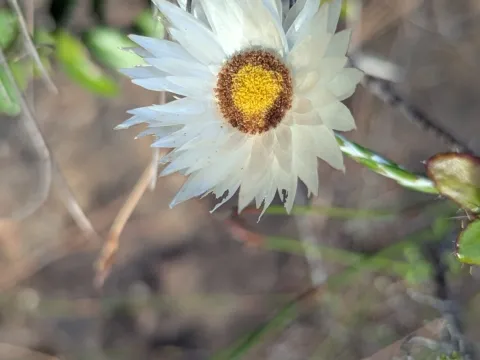
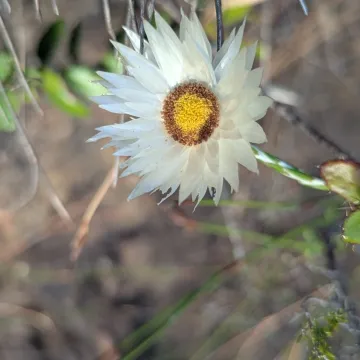
Botanically, the plant develops as a dense, low-growing shrublet with narrow leaves often covered in fine, silvery hairs. The inflorescences are small heads surrounded by stiff, papery bracts. It is these bracts that act as the ornamental part of the flower, providing the iconic structure that keeps the plant attractive for decorative purposes over an extended period.
Cultivation requires strict attention to soil composition and drainage. Edmondia sesamoides demands full sun exposure and a substrate that prevents any root zone saturation. Over-fertilization should be avoided, as the plant is naturally adapted to survive in harsh, low-fertility soils, and excessive nutrients may lead to leggy, weak growth.
Regarding its utility, the primary use is the production of everlasting decorative bouquets and wreaths. Growers should be vigilant against root rot (Phytophthora) which occurs in poorly drained soils, as well as common greenhouse pests like spider mites or aphids if the plant is grown in sheltered or containerized environments.
Photo gallery