Edraianthus serpyllifolius
Edraianthus serpyllifolius
Description
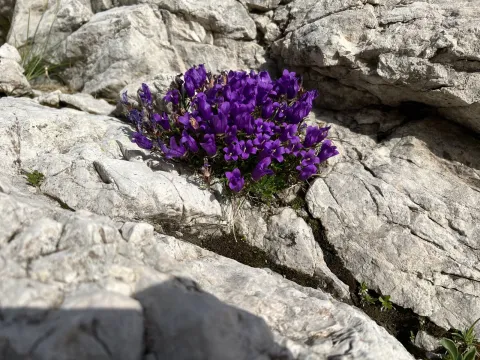
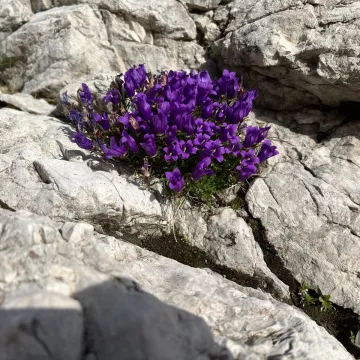
Edraianthus serpyllifolius, commonly known as the creeping edraianthus, is a perennial flowering plant belonging to the Campanulaceae family. It is a highly sought-after species in alpine horticulture, valued for its dense, mat-forming growth habit and vivid purple, bell-shaped flowers that appear in early summer.
Originating from the mountainous regions of the Balkan Peninsula, this plant is naturally adapted to harsh, rocky environments. Its ability to thrive in poor, stony soils makes it an ideal candidate for rockeries and scree gardens where other ornamental crops might fail to establish themselves due to competition or soil humidity.
Botanically, the plant is characterized by its narrow, linear foliage forming tight rosettes and a strong taproot system. The plant produces terminal, cluster-like inflorescences that practically obscure the foliage during peak bloom. It is a slow-growing species that rewards the gardener with longevity if the specific ecological conditions of its native habitat are replicated.
Cultural requirements emphasize the need for excellent drainage. Soil should be neutral to alkaline, gritty, and lean. Exposure must be full sun, as any shade will cause the plant to become leggy and lose its characteristic dense appearance. Irrigation must be managed carefully; while established plants are drought-tolerant, water must be kept away from the root collar to prevent rot.
In landscape use, it is primarily employed as a decorative groundcover for rock crevices or alpine containers. Regarding plant health, Edraianthus serpyllifolius is relatively hardy, though it remains susceptible to root rot if waterlogged. Common pests include slugs and snails, which can cause significant damage to the succulent-like foliage during the spring growth phase.
Photo gallery