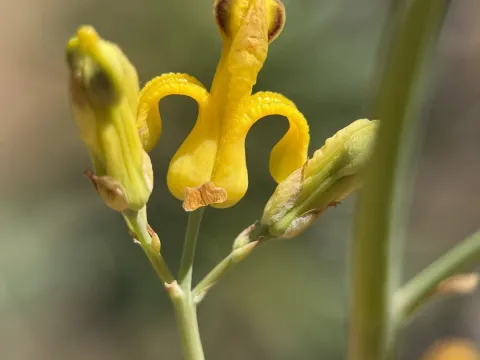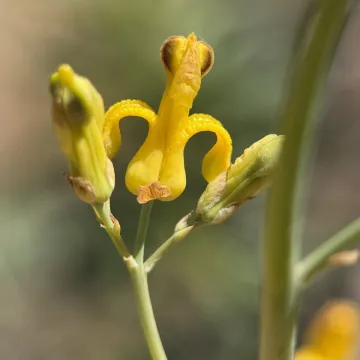
Golden ear drops
Ehrendorferia chrysantha
Description
Ehrendorferia chrysantha, commonly known as golden ear drops, is a perennial herbaceous plant belonging to the Poppy family (Papaveraceae). Formerly classified under the genus Dicentra, it is now recognized as a distinct genus, noted for its resilience and unique physiological adaptations to arid environments.
Native to the chaparral and mountain regions of California, this plant has evolved to thrive in harsh, fire-prone habitats. Its natural distribution is largely defined by specific soil conditions and climate patterns, where it functions as a pioneer species on disturbed sites or post-fire terrain.
The plant features upright, robust stems that can reach heights of up to 1.5 meters, adorned with glaucous, fern-like foliage. The blossoms are distinctively bright yellow and tubular, arranged in terminal racemes. Its structural architecture is designed to minimize transpiration while maximizing reproductive success in high-heat environments.
Cultivation requires strict adherence to specific site conditions, particularly regarding soil aeration. Ehrendorferia chrysantha thrives in well-drained, sandy or gravelly soil profiles. It is intolerant of heavy, clay-based substrates that hold moisture during dormant periods, as these conditions frequently lead to root rot and other pathogen-related issues.
In terms of practical usage, this plant is a staple for xeriscaping and sustainable ornamental landscapes. While it is not a traditional mass-production crop, it is highly valued by specialized gardeners for its aesthetic appeal and drought resistance. Common issues include aphid infestations during the spring growth phase and susceptibility to soil-borne fungi if the drainage requirements are not met.
Photo gallery