Ehrharta brevifolia
Ehrharta brevifolia
Description
Ehrharta brevifolia is a perennial grass species belonging to the Poaceae family. Known for its resilience, this plant serves as a significant botanical asset in arid and semi-arid environments where other traditional forage crops struggle to survive and provide consistent yields.
The origin of this species is traced back to South Africa. Its natural distribution is primarily found in regions with specific Mediterranean-type climates, characterized by dry summers and cooler, moist winters. These evolutionary adaptations allow it to thrive in nutrient-poor soils where moisture availability is limited.
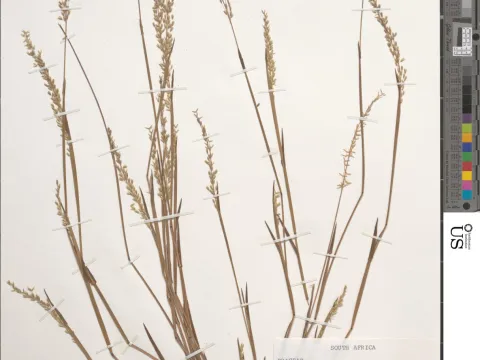
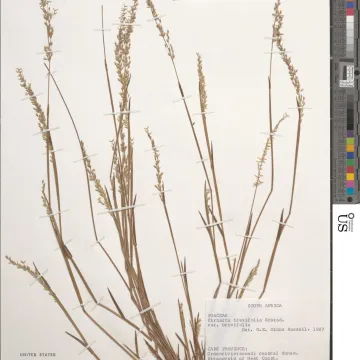
Botanically, the plant features narrow leaf blades and characteristic inflorescences that are adapted to wind pollination. Its root structure is designed to explore soil profiles efficiently, which helps in preventing soil erosion. The growth habit is typically tufted, providing a good ground cover density.
Agronomic requirements for this crop focus on avoiding waterlogged soils. It performs exceptionally well in sandy or rocky substrates where aeration is optimal. Regarding its cultivation, it requires minimal input in terms of fertilizers, although periodic monitoring for nutrient deficiencies during the early stages of establishment is recommended.
The primary utility of the plant lies in its use as a forage source for grazing livestock. It is valued for its hardiness and ability to regenerate under moderate grazing pressure. Common issues include fungal rusts and occasional insect infestations, which are typically managed through proper pasture rotation and healthy soil management practices.
Photo gallery