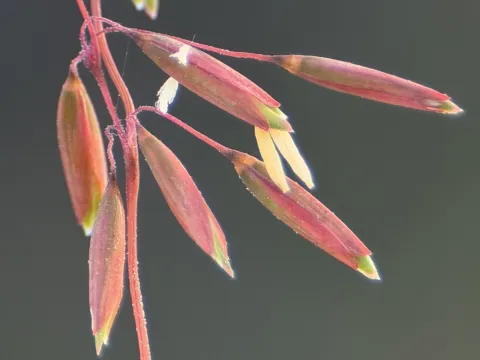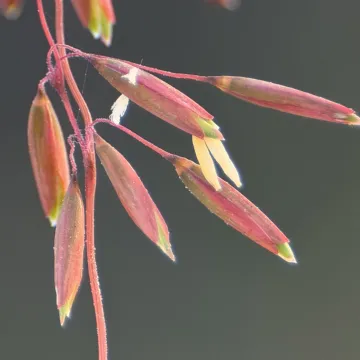
Perennial veldt grass
Ehrharta calycina Sm.
Description
Perennial veldt grass (Ehrharta calycina Sm.) is a significant perennial grass species belonging to the Poaceae family. It is widely recognized in agricultural circles for its resilience and utility in forage production, particularly in regions prone to dry spells and low fertility soils.
Native to South Africa, this species has successfully naturalized in various regions with a Mediterranean climate, such as parts of Western Australia and the United States. Its ability to colonize sandy or disturbed soils has made it a subject of interest for both pastoral agriculture and soil stabilization projects.
Botanically, the plant is characterized by its tufted growth habit, narrow leaves, and distinct panicle inflorescences. It possesses a deep and efficient root system, which is the primary driver of its exceptional drought tolerance compared to more traditional commercial pasture grasses.
Regarding agrotechnology, the species prefers well-drained, light-textured soils and requires minimal moisture once established. While it thrives in poor soil conditions, optimal forage yields are achieved through controlled grazing management and light supplemental fertilization. It is crucial to prevent overgrazing to ensure the plant's long-term persistence in the field.
Economically, its primary use is as a grazing fodder for livestock. However, farmers should be aware of potential issues like leaf rust in humid conditions and the susceptibility of young seedlings to competition from aggressive weeds. Proper management includes periodic rest periods for the pasture to allow for seed head development and stand rejuvenation.
Photo gallery