Broad-leaved oleaster
Elaeagnus macrophylla
Description
The broad-leaved oleaster (Elaeagnus macrophylla) is an evergreen or semi-evergreen shrub belonging to the Elaeagnaceae family. In agricultural and horticultural contexts, it is highly regarded not only for its ornamental foliage but also for its symbiotic relationship with nitrogen-fixing bacteria, which enhances soil health.
Native to East Asia, including regions of Japan, Korea, and China, the plant has evolved to thrive in coastal habitats. This environmental history has endowed the species with exceptional tolerance to wind and saline conditions, making it a reliable choice for gardens located in maritime climates.
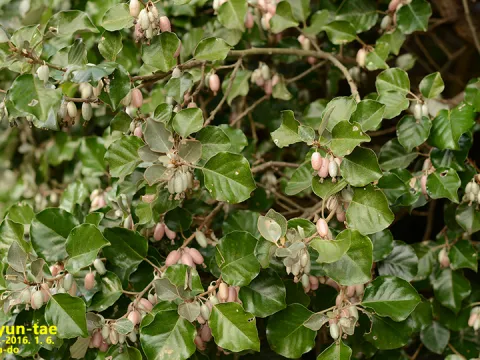
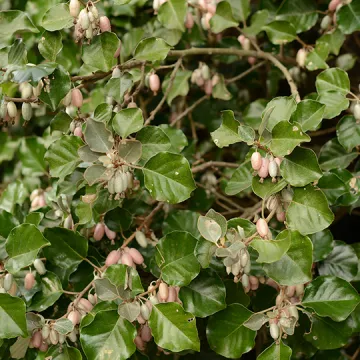
Botanically, the plant is characterized by its broad, leathery, dark green leaves that possess a striking silver-scaled underside. This contrast provides a shimmering effect in the landscape. The plant produces small, fragrant, tubular flowers in late autumn, which eventually ripen into edible, distinctively shaped berries.
Successful cultivation requires a site with full sun to partial shade and exceptionally well-drained soil. While Elaeagnus macrophylla is remarkably drought-tolerant once established, young plants require supplemental irrigation during the initial growing seasons. Minimal pruning is typically required, mainly to maintain structural integrity and density.
The species is extensively utilized in landscaping for creating windbreaks, privacy hedges, and as a backdrop for ornamental borders. Beyond its aesthetic appeal, it serves as a valuable tool for soil stabilization and improvement. Given its high resistance to common pests and diseases, it is considered an exceptionally low-maintenance crop for both commercial nurseries and home gardens.
Photo gallery