
Spreading oleaster
Elaeagnus reflexa
Description
Spreading oleaster (Elaeagnus reflexa) is an evergreen shrub species belonging to the Elaeagnaceae family. It is recognized for its scandent or climbing habit, which makes it a versatile plant for both formal hedging and informal ornamental garden designs where vertical space can be utilized.
The plant originates from East Asia, specifically from regions across China and Japan. It thrives in mild, subtropical environments where winters are not severe. In its native habitat, it is often found in scrublands and forest margins, reflecting its high adaptability to different light levels, though it clearly prefers sunny exposure for optimal health.
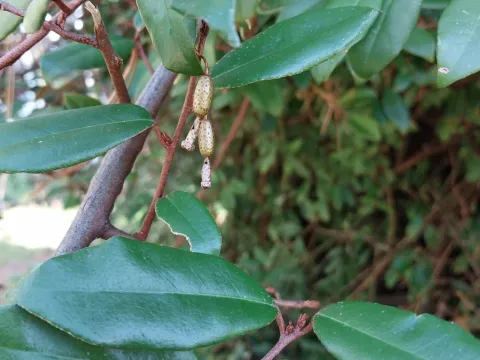
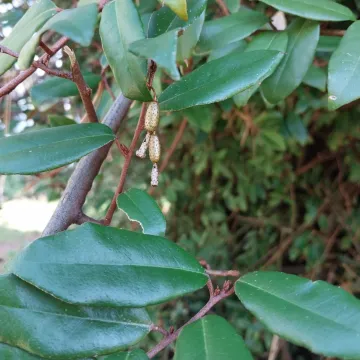
Botanically, Elaeagnus reflexa is characterized by its thick, leathery leaves covered with silvery scales on the underside. The stems feature sharp thorns, providing a natural defense mechanism. The plant produces small, fragrant, yellowish flowers during the autumn and winter months, which eventually develop into edible drupes, providing a food source for local bird populations.
Cultivation requirements involve providing well-drained, slightly alkaline soil and ensuring the plant receives adequate sunlight. While it is somewhat drought-tolerant once established, it responds well to consistent moisture during the growing season. Pruning is essential to control its rapid growth and to maintain the desired aesthetic shape of the shrub.
Common issues in cultivating this species include infestation by scale insects and mealybugs, which can weaken the plant if left untreated. Disease-wise, the most common problems arise from waterlogging and lack of airflow, which may lead to fungal root issues. Regular monitoring and strategic pruning are the best practices for maintaining a healthy specimen.
Photo gallery