Eleutherococcus spinosus
Eleutherococcus spinosus
Description
Eleutherococcus spinosus is a perennial shrub species belonging to the Araliaceae family. Known for its potent adaptogenic properties, this plant is increasingly cultivated for the pharmaceutical industry, serving as a primary source of bio-active compounds that support human immune health and stress resistance.
The plant originates from East Asia, specifically inhabiting the undergrowth of coniferous and deciduous forests in regions of China, Japan, and the Korean Peninsula. In agricultural practice, it requires growing conditions that mimic its native habitat: moderate climates, sufficient rainfall, and protection from intense direct sunlight, especially during the early stages of establishment.
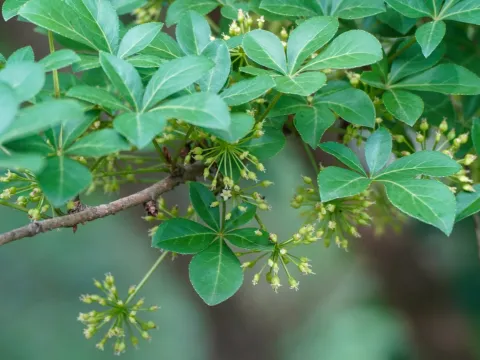
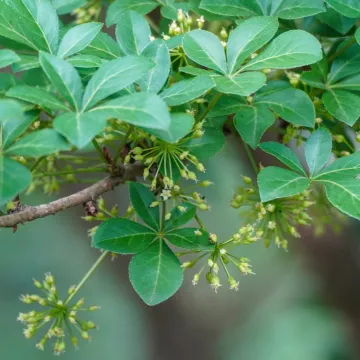
Botanically, it is a deciduous woody shrub that can reach heights of up to 3 meters. The stems are densely covered in thorns, which provide a natural defense mechanism. The root system is extensive and fibrous, concentrating the medicinal elements known as eleutherosides. The leaves are characteristically palmate, and the plant produces dark, berry-like drupes which are not for commercial human consumption.
Regarding soil and agro-technology, the plant prefers loamy, slightly acidic, and well-drained soils rich in organic matter. Cultivators must ensure steady moisture levels, as prolonged drought can severely impact the root development and overall yield. Integrated pest management should focus on preventing fungal diseases that occur in high-humidity conditions, such as leaf spot or powdery mildew.
The primary use of the crop is the harvest of roots for the pharmaceutical sector. After 5 to 7 years of growth, the roots are extracted, dried, and processed into tinctures, extracts, or powders. Beyond its medicinal utility, the shrub is also valued in landscaping for its hardy, protective, and ornamental qualities in shaded garden sections.
- Preferred environment: Partial shade with stable, moist, fertile soil.
- Harvesting cycle: 5–7 years for optimal root development.
- Propagation: Primarily via root cuttings or nursery-grown seedlings.
- Key challenge: Weed management in the first two years of cultivation.
Photo gallery