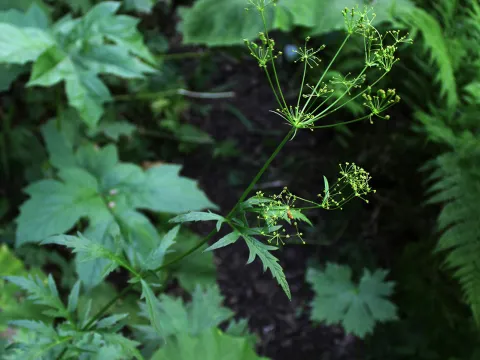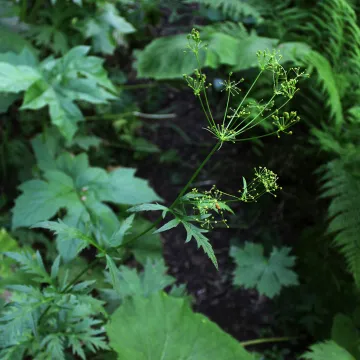

Eleutherospermum cicutarium
Eleutherospermum cicutarium
Description
Eleutherospermum cicutarium is a perennial herbaceous plant belonging to the Apiaceae family. In an agricultural and botanical context, this plant is recognized for its specific chemical composition and its role as a niche crop in specialized medicinal or experimental herb farming.
Originating primarily from the mountainous regions of the Caucasus, this species is naturally adapted to cool, humid environments. Its distribution is localized to areas with fertile soils and temperate climatic conditions, which dictates the environmental requirements for successful commercial or research cultivation.
The plant features a complex, branched structure with finely divided pinnate leaves typical of the parsley family. Its inflorescence is a classic compound umbel, which develops into fruit segments that detach easily upon maturity. The root system is deep and persistent, allowing the plant to thrive in stable, well-structured soil environments.
Agricultural success with this species depends on providing well-drained, nutrient-rich loam soils with a neutral pH. It requires consistent moisture throughout the growing season but is sensitive to waterlogging. Cultivation techniques should prioritize mechanical weed control and site selection that mimics its native habitat, specifically avoiding intense direct midday sun in warmer climates.
Common issues affecting this crop include fungal infections such as powdery mildew and various leaf-spot pathogens. Pests like aphids and leaf-eating insects are also observed. Integrated pest management (IPM) strategies, including biological controls and targeted preventive spraying, are recommended to maintain plant health and biomass quality.
Photo gallery