Great Basin wildrye
Elymus cinereus
Description
Great Basin wildrye (Elymus cinereus) is a tall, perennial bunchgrass belonging to the Poaceae family. Recognized for its massive size and resilience, it stands as one of the most significant native grass species in the arid and semi-arid regions of the western North American continent, providing essential cover and forage.
The plant is naturally adapted to diverse habitats, ranging from valley bottoms to mountainous slopes. Its evolutionary development in harsh environmental conditions has made it remarkably tolerant of drought, cold, and varying soil textures. This evolutionary heritage allows it to thrive in climates that are generally hostile to less hardy forage species.
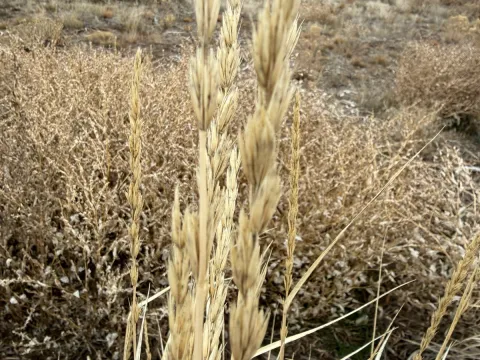
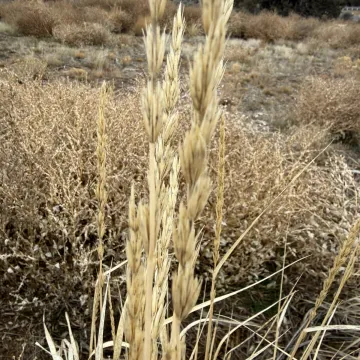
Botanically, this grass is distinguished by its dense, coarse, and deep-rooted growth habit. The stems are robust, often reaching heights of two meters, and the foliage displays a signature blue-green or "ashy" hue. The seed heads are dense spikes that produce significant quantities of seed, which serves as a valuable resource for both livestock feeding and wildlife support.
Agronomic management of Elymus cinereus requires attention to site selection and initial establishment. While the grass is highly tolerant of drought once established, it benefits from weed control during the seedling stage. Soils should be well-drained, as the species is sensitive to prolonged waterlogging, yet it adapts well to soils with moderate alkalinity.
In terms of хозяйственного (economic) use, it is primarily managed for forage production, offering large yields of biomass for livestock. Additionally, its extensive and deep root system makes it an excellent choice for revegetation projects, land reclamation, and the mitigation of soil erosion in degraded agricultural landscapes.
- Excellent drought tolerance and winter hardiness.
- Superior soil stabilization properties.
- Valuable forage source for cattle in late seasons.
- High biomass production potential in low-input systems.
Photo gallery