Sea wheatgrass
Elymus farctus
Description
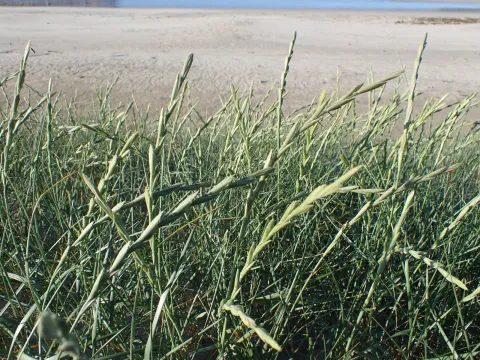
Sea wheatgrass (Latin: Elymus farctus) is a perennial grass species belonging to the Poaceae family. Recognized for its exceptional tolerance to salinity and mechanical stress, this grass serves as a vital component in coastal biodiversity, particularly in habitats where few other crops can thrive.
The native range of Elymus farctus encompasses the coastal regions of Europe, the Mediterranean, and parts of Northern Africa. It is a dominant species in maritime dune ecosystems, where it functions as a primary sand-binder, actively creating and stabilizing the dunes that protect inland areas from storm surges.
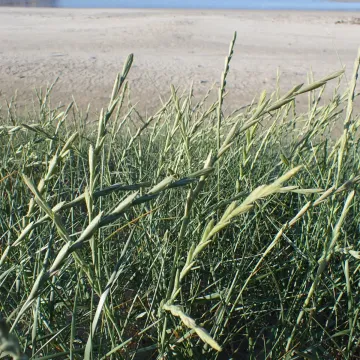
From a botanical standpoint, the plant is characterized by its rhizomatous growth habit, which allows it to spread horizontally through sand while developing a deep root system. The leaves are typically glaucous and stiffened to withstand salt-laden winds, while the flowering spike is sturdy and capable of producing viable seeds even under harsh environmental pressure.
Regarding cultivation and soil requirements, sea wheatgrass demands well-drained, sandy soils and high light exposure. In agricultural applications, it is not grown for biomass production but for its role in phytoremediation and soil stabilization. Management practices focus on minimal disturbance of the soil profile to allow the extensive root network to function effectively.
The primary use of this grass is in environmental engineering to combat coastal erosion. While not considered a high-quality forage crop due to its fibrous nature, it can be grazed by livestock in coastal areas where other vegetation is scarce. The species is notably hardy, exhibiting strong resistance to most common cereal diseases and pests prevalent in cultivated meadows.
Photo gallery