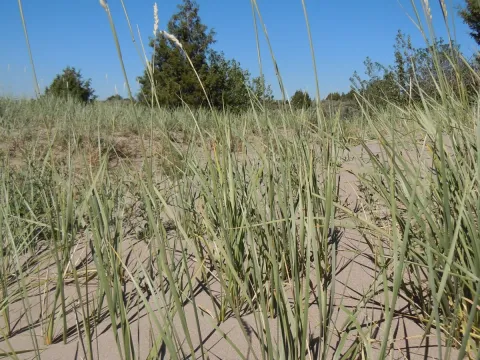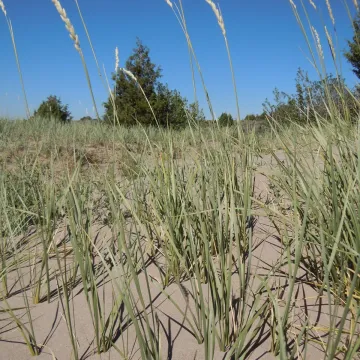
Yellow wildrye
Elymus flavescens
Description
Yellow wildrye (Elymus flavescens) is a perennial grass belonging to the Poaceae family. This species is recognized for its significant ecological and agricultural value, particularly in challenging environments where soil stability and drought resistance are paramount.
The plant originates from North America, specifically inhabiting sandy dunes, sandy plains, and dry open areas. Its natural distribution is a testament to its ability to thrive in nutrient-poor, sandy soils where moisture is frequently limited, making it an essential species for desertification prevention.
Botanically, the plant is characterized by a dense, tufted growth habit and a highly efficient root system that stabilizes sandy substrates. It produces slender leaves and yellowish spike-like inflorescences, which give the plant its common name and distinct appearance during the growth cycle.
Agronomic requirements emphasize the need for well-drained, sandy soil types. It is highly drought-tolerant and cold-hardy, making it a low-input crop suitable for regions with limited rainfall. Proper management involves minimal disturbance to the soil to preserve the integrity of the root system and ensure long-term stand productivity.
The primary economic use of this grass is in soil erosion control and rangeland forage production. It is frequently employed in reclamation projects for disturbed lands, such as mined areas or eroded dunes, providing both vegetative cover and high-quality biomass for grazing animals in arid regions.
Common health issues for the crop include rust diseases and occasional infestations by soil-dwelling larvae. Integrated pest management strategies, focusing on site selection and ensuring healthy initial establishment, remain the most effective methods to prevent significant economic impact on seed production or pasture quality.
Photo gallery