Elytraria imbricata
Elytraria imbricata
Description
Elytraria imbricata is a perennial herbaceous plant belonging to the Acanthaceae family. Known for its distinct growth habit, it is a significant member of the tropical and subtropical botanical communities in the Americas, often found in diverse habitats ranging from arid shrublands to moist forests.
The native range of this plant extends across the Americas, including parts of the southern United States, Mexico, and Central America. Its ability to colonize various soil types, particularly in disturbed areas, highlights its role as a resilient species within its native ecosystems.
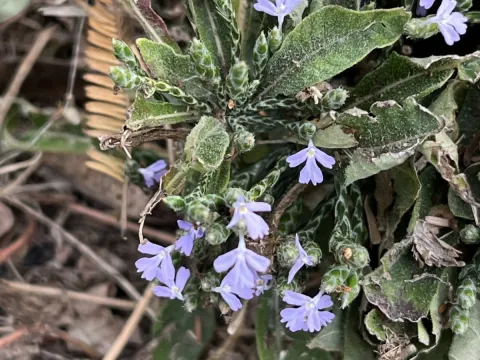
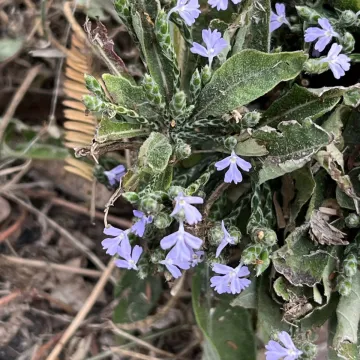
Botanically, the species is characterized by a basal rosette of leaves from which several elongated spikes emerge. The inflorescences are dense and covered with overlapping, scale-like bracts, giving the plant its distinctive "imbricate" or shingle-like appearance. Small flowers, usually white or blue, bloom along these spikes during the growing season.
Cultivation requirements for Elytraria imbricata emphasize the need for well-draining soil and a moderate watering regime. While it thrives in partial shade, it is known for its tolerance to various light conditions. In agricultural or garden settings, it is valued for its hardiness and minimal maintenance, provided the drainage is managed properly.
In terms of economic and practical use, Elytraria imbricata is primarily utilized in traditional medicine. Indigenous cultures have historically employed the plant as a natural remedy for various digestive and inflammatory conditions. Research into its chemical composition continues to be a subject of interest for those exploring natural pharmaceutical alternatives.
- Distinctive imbricate (overlapping) bracts on spikes.
- Adaptable to a wide range of light conditions.
- Resilient against common environmental stressors.
- Recognized for traditional medicinal applications.
Photo gallery