Elytrophorus spicatus
Elytrophorus spicatus (Willd.) A. Camus
Description
Elytrophorus spicatus is an annual grass species belonging to the Poaceae family. While not a globally standardized commodity crop, it serves as a critical botanical component of tropical grasslands and wetlands, providing natural forage for livestock in various equatorial regions.
The plant originates from the tropical zones of Africa, Asia, and Australia. Its natural distribution is largely defined by its preference for periodically inundated habitats, such as wetlands, riparian zones, and waterlogged paddy margins, where it thrives while other grasses might fail to establish.
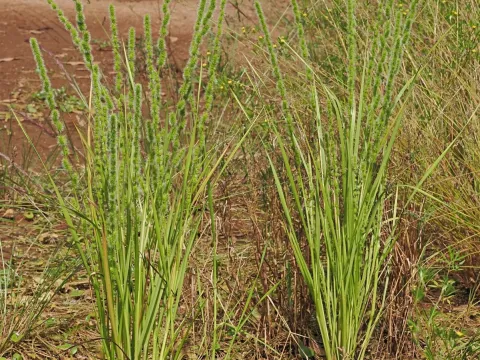
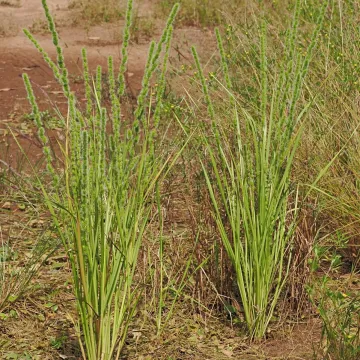
Botanically, the plant is recognized by its slender, erect stems that grow up to 80 cm in height and its characteristic dense, spike-like inflorescence. The leaves are typically narrow and glabrous. Its root system is fibrous and highly efficient at nutrient uptake in moist, heavy soils common in its native range.
Agronomically, the species demands specific environmental conditions, primarily high moisture availability and heavy, silt-rich soil textures. While it is rarely cultivated as a primary monoculture, it is often managed as part of natural grazing systems. Farmers in its range often observe its rapid growth cycle triggered by the onset of monsoon or rainy seasons.
The main agricultural use for Elytrophorus spicatus is as a pasture forage. It serves as an important source of fodder for cattle and other ruminants during periods of seasonal floods. Additionally, it is monitored in agricultural systems as a potential weed in rice cultivation, necessitating appropriate management strategies to ensure field productivity.
- Family: Poaceae
- Plant Type: Annual Grass
- Habitat: Wetlands and inundated soils
- Key Use: Forage and pasture biomass
Photo gallery