Purple crowberry
Empetrum atropurpureum
Description
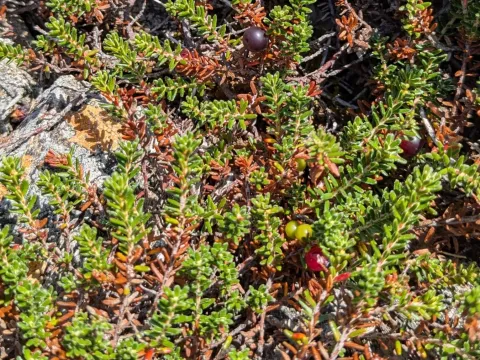
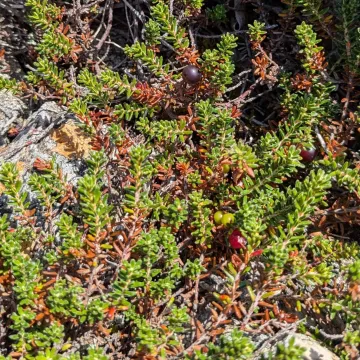
Purple crowberry (Empetrum atropurpureum) is a perennial, evergreen prostrate shrub belonging to the Ericaceae family. Native to the cool, temperate regions of North America, this species is noted for its unique dark-purple berries and its preference for acidic, nutrient-poor soils common in northern coastal and alpine environments.
The plant features low-growing, mat-forming stems covered in small, needle-like, leathery leaves that are adapted to withstand harsh winters and wind-exposed habitats. Its growth habit allows it to form dense carpets, making it an excellent ground cover. The root system is shallow and symbiotic, relying on mycorrhizal fungi to extract nutrients from challenging soils.
For cultivation, purple crowberry requires well-drained, acidic soil with a pH typically ranging between 4.0 and 5.5. It thrives in cool locations with plenty of light, although it benefits from partial shade in warmer climates to prevent soil overheating. Constant moisture is essential, though it is critical to avoid waterlogged conditions which can lead to root rot.
Agrotechnical management involves applying organic mulch, such as peat moss or pine needles, to maintain soil acidity and moisture levels. Fertilizer application should be carefully managed, using formulas specifically intended for ericaceous plants, and applied sparingly to avoid burning the roots. Weeding should be done manually to prevent damage to the plant's delicate surface root system.
Economically, the plant is harvested for its edible fruit, which is highly valued for its anthocyanin content. In addition to food production, it is a significant plant in ornamental gardening, particularly for rock gardens and peat beds where its year-round green foliage and berries provide aesthetic interest in regions with harsh climates.
- Excellent cold hardiness
- Year-round evergreen foliage
- Low maintenance after establishment
- Requires acidic soil conditions
- Suitable for ground cover in cold regions
Typical diseases include fungal root infections caused by poor drainage, while common pests include spider mites during hot, dry spells. Effective control measures focus on maintaining optimal soil drainage, consistent irrigation during the growing season, and ensuring proper spacing for air circulation.
Photo gallery