Eames' crowberry
Empetrum eamesii
Description
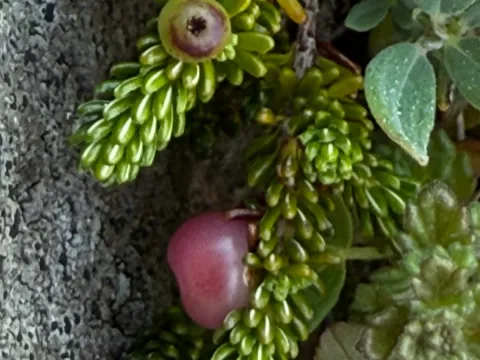
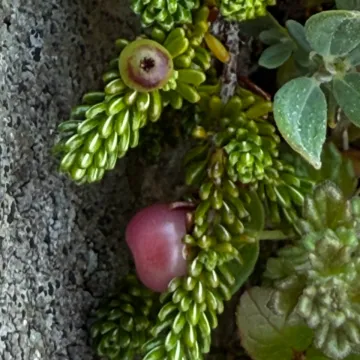
Eames' crowberry (Latin: Empetrum eamesii) is a low-growing, evergreen shrub belonging to the Ericaceae family. It is recognized for its creeping habit and ability to form dense, mat-like ground covers. In agricultural and horticultural terms, this species is noted for its resilience and its production of distinctive, pink to red-colored berries that are harvestable in specific subarctic zones.
The origin of this species is traced to the cold, northern reaches of North America, particularly Labrador, Newfoundland, and surrounding islands. It is a quintessential arctic-alpine plant, thriving in nutrient-poor, rocky, or peaty soils. Its cultivation is generally restricted to regions that mimic its natural habitat, requiring cool temperatures throughout the growing season.
Botanically, the plant is characterized by small, needle-like leaves and a procumbent stem structure that roots easily. Unlike other species in the genus, the fruits of Empetrum eamesii are notable for their unique pigmentation and flavor profile. The plant’s adaptation to extreme cold is supported by a robust root system and a low-profile growth habit that protects it from harsh winds.
Agricultural requirements for this crop focus on maintaining acidic soil conditions (pH 4.5 to 5.5) and ensuring excellent drainage. It does not tolerate high levels of fertilizer or stagnant water, which can lead to rapid root rot. Ideally, growers should use organic amendments like sphagnum peat and apply a layer of mulch to maintain moisture while preventing direct contact between the foliage and wet soil.
The plant is utilized for specialty fruit production and as an ornamental species in rock gardens or ecological restoration projects. Its maintenance involves minimal pruning and protection from invasive weeds. Key phytosanitary concerns include:
- Fungal pathogens such as grey mold (Botrytis) under high humidity.
- Root-related diseases caused by waterlogged soil conditions.
- Infestations by sap-sucking insects if planted in overly sheltered environments.
Photo gallery