Crowberry
Empetrum nigrum
Description
Crowberry (Empetrum nigrum) is a perennial evergreen dwarf shrub belonging to the Ericaceae family. The plant is characterized by creeping stems that form dense, mat-like ground cover. It is highly valued in horticulture for its resilience in subarctic climates and its ability to thrive where other berries fail to grow.
Native to the arctic and subarctic regions of the Northern Hemisphere, this plant naturally populates tundras and coniferous forests. Its extensive range across Northern Europe, Asia, and North America demonstrates its adaptability to extreme weather conditions, making it a robust choice for cold-climate farming and landscape design.
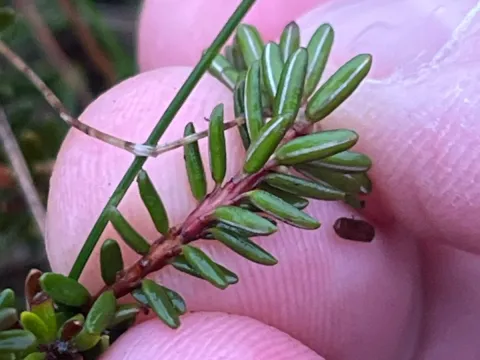
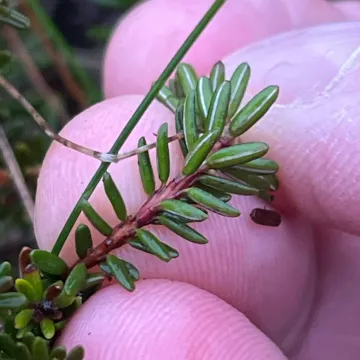
Botanically, the plant features small, needle-like leaves that remain green throughout the year. The flowers are small and inconspicuous, developing into round, black berries that are rich in vitamins. The plant relies on an acidic environment to flourish and maintains a slow, steady growth habit, often spreading through underground rhizomes.
Agronomic requirements for Crowberry focus on creating an appropriate soil environment. The plants demand highly acidic, well-drained soil rich in organic matter, such as peat or pine needles. Irrigation management is critical, as the roots require consistent moisture without being waterlogged. Proper site selection in a partially sunny area significantly boosts fruit yield.
The culinary and medicinal uses of Crowberry are diverse, ranging from jams and jellies to its use in traditional herbal remedies due to its high antioxidant content. Commercially, the crop is gaining interest as a specialty berry. It faces very few pests or diseases in its natural range, provided that the soil drainage is well-maintained to prevent root rot.
Photo gallery