Enceliopsis nudicaulis
Enceliopsis nudicaulis
Description
Enceliopsis nudicaulis, commonly known as the naked-stemmed sunray, is a perennial flowering plant belonging to the Asteraceae family. This species is native to the arid desert regions of the Western United States, specifically thriving in environments where extreme heat and low precipitation are the dominant climatic factors.
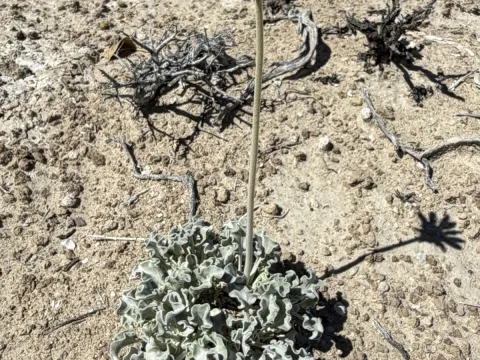
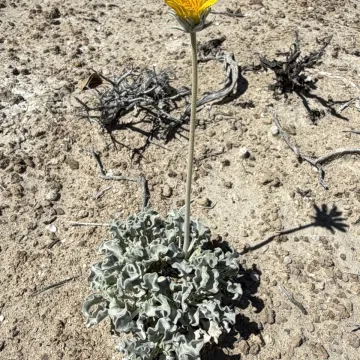
Botanically, the plant is characterized by a basal rosette of silvery-pubescent leaves that serve as an adaptation to reduce water loss through transpiration. Its most striking feature is the tall, naked stem that supports a large, solitary bright yellow flower head, which closely resembles a sunflower but is adapted to much harsher ecological niches.
In terms of habitat and soil requirements, Enceliopsis nudicaulis demands excellent drainage, typically favoring rocky or sandy slopes. It is highly intolerant of damp, heavy soils, which can lead to rapid root rot. The cultural practices for this plant should focus on replicating its natural habitat by minimizing soil amendments and strictly controlling moisture levels.
The climatic adaptability of this plant makes it a subject of interest for specialized horticulture. It thrives under full sun exposure and is capable of enduring significant temperature fluctuations. Unlike many agricultural crops, it does not require supplemental fertilization, as it is evolutionary conditioned to grow in nutrient-poor substrates.
Regarding its хозяйственное use, Enceliopsis nudicaulis is highly valued in xeriscaping and sustainable landscape design. It provides a unique aesthetic to dry garden designs and rockeries where high-maintenance plants fail. Its resistance to typical garden pests, due to its specialized chemical profile and adaptation to desert environments, makes it a low-input choice for arid-region landscaping.
- Requires well-draining, rocky soils.
- Extremely drought-tolerant once established.
- Prefers full sun and high temperatures.
- Minimal maintenance and fertilization needs.
Photo gallery