Ruby saltbush
Enchylaena tomentosa
Description
Ruby saltbush (Enchylaena tomentosa) is a perennial semi-shrub belonging to the Amaranthaceae family. Recognized in agriculture as a highly resilient halophyte, this plant is valued for its exceptional ability to thrive in harsh, saline-prone environments where traditional agricultural crops often fail.
Native to Australia, this plant is widespread across the continent’s arid zones. Its natural habitat includes semi-deserts and dry woodlands, where it plays a critical role in stabilizing fragile soils. Due to its evolutionary adaptation to low rainfall, it has become a focus for sustainable forage development in regions facing desertification.
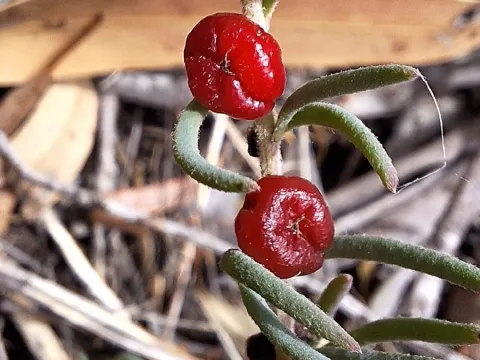
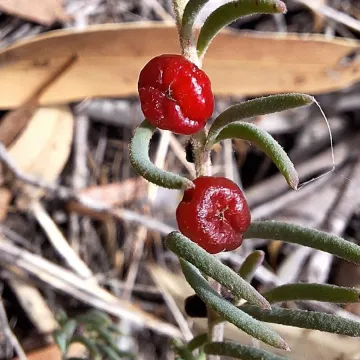
Botanically, the plant features succulent leaves covered in fine hairs (tomentose), which significantly reduce water loss through transpiration. The plant grows as a low-spreading shrub, typically reaching up to one meter in height. Its most distinctive feature is the colourful, berry-like fruit, which transitions from yellow to bright red as it ripens, serving as a food source for local fauna.
Regarding agrotechnical requirements, Ruby saltbush demands full sun exposure and well-drained, sandy or loamy soils. It has a low demand for irrigation and fertilizer, making it a low-input crop. Planting is typically achieved through direct seeding. Once established, the shrub requires minimal maintenance, though management of livestock grazing intensity is necessary to ensure long-term sustainability.
The primary use of the plant is in livestock forage, particularly during the dry season when protein sources are scarce. Furthermore, it is extensively used in land reclamation projects to mitigate soil erosion and improve the productivity of saline rangelands. While it is generally robust, growers should monitor for potential pest infestations and ensure that the soil remains well-drained to prevent root pathogens.
- Extreme salt and drought tolerance
- Nutritious foliage for sheep and cattle
- Natural soil stabilization properties
- Adaptability to nutrient-poor soils
Photo gallery