False rue anemone
Enemion biternatum
Description
The false rue anemone (Enemion biternatum) is a perennial herbaceous plant belonging to the Ranunculaceae family. It is a classic spring ephemeral that serves as a beautiful ground cover in woodland habitats. Though primarily used in decorative gardening, it represents a significant botanical interest for its delicate appearance and specific life cycle.
Native to North America, the plant's range spans across the eastern and central regions of the continent. It thrives in deciduous forests, where it occupies the floor in early spring. This adaptation allows the plant to complete its flowering process before the forest canopy closes, ensuring access to the light it needs to produce seeds and store nutrients in its rhizomes.
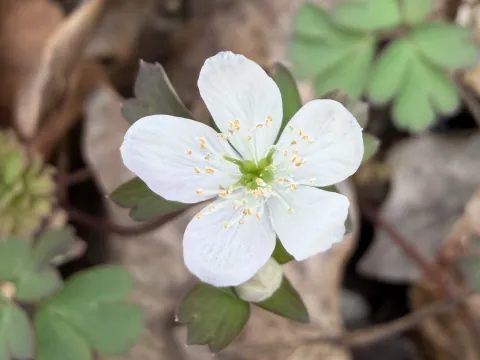
Botanically, Enemion biternatum features delicate, biternately compound leaves and slender stems. The flowers are small and white, consisting of five petal-like sepals that create an airy, star-like effect. The root system consists of small tubers or rhizomes, which allow the plant to remain dormant during the heat of the summer months.
Cultivation requires replicating woodland conditions. The plant performs best in shaded or semi-shaded sites with moist, rich, and well-draining soil. It is particularly well-suited for woodland gardens or north-facing borders where the soil remains consistently cool. Adding organic matter, such as leaf mold or compost, is highly recommended to improve soil structure and moisture retention.
Regarding maintenance, the plant is relatively low-care once established. Watering during dry springs is essential to keep the foliage healthy. While generally disease-resistant, the plant can be susceptible to fungal issues if drainage is poor or if the site remains waterlogged. Gardeners should also monitor for slugs and snails, which may graze on the young, tender foliage during the early spring growth flush.
Photo gallery