Enhalus acoroides
Enhalus acoroides
Description
Enhalus acoroides is a prominent species of seagrass belonging to the Hydrocharitaceae family. It is the only species within its genus and plays a significant role in tropical marine ecosystems, where it forms dense meadows that provide habitat and food for a vast array of marine organisms.
The plant is native to the coastal waters of the Indian and Western Pacific Oceans. It primarily thrives in shallow, sheltered sandy or muddy substrates, often in close proximity to mangrove forests. Its distribution is closely linked to water quality, temperature, and light penetration, making it an indicator species for the health of coastal environments.
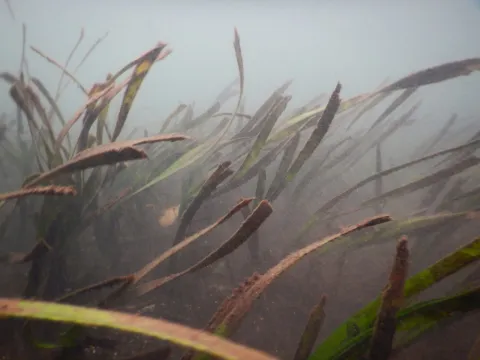
Morphologically, Enhalus acoroides is characterized by a robust, fiber-covered rhizome and long, strap-like leaves that can grow over one meter in length. Its reproductive strategy is particularly fascinating: it employs surface pollination, where male flowers detach and drift on the surface to encounter female flowers that reach the surface on specialized, spiraling stalks.
In terms of habitat requirements, the plant demands consistent water salinity and high light intensity for effective photosynthesis. While not a traditional crop in terrestrial agriculture, it is managed in coastal conservation efforts. Restoration projects often focus on sediment stabilization and creating suitable conditions for natural colonization by this resilient aquatic plant.
Economically and ecologically, this seagrass serves as a primary food source for endangered species like the dugong and green sea turtle. In some coastal communities, its biomass is utilized as organic fertilizer, and researchers are currently exploring its potential in pharmacology due to the presence of secondary metabolites that exhibit antioxidant and antimicrobial properties.
- Excellent sediment stabilizer
- Provides critical nursery ground for fish
- Highly resilient to tropical fluctuations
- Key player in blue carbon sequestration
Photo gallery