Cliff banana
Ensete superbum
Description
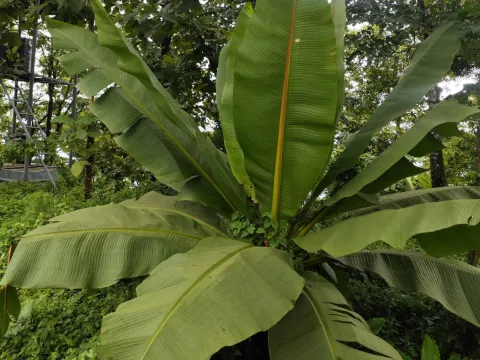
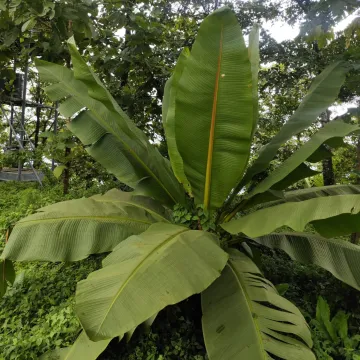
Cliff banana (Ensete superbum) is a remarkable perennial herb belonging to the Musaceae family. Unlike common commercial bananas, this species is noted for its dramatic, bulbous, bottle-shaped trunk that provides a striking architectural appearance. It is classified primarily as an ornamental plant rather than an agricultural crop intended for food production.
The native distribution of this species is confined to the rocky hills and mountainous regions of India. It has evolved to thrive in rocky crevices and slopes, which makes it distinct from other members of the genus that prefer deep, flat rainforest soils. Due to its origin, it exhibits high tolerance for drainage-heavy environments and specific light conditions typical of high-altitude tropical habitats.
Botanically, the Cliff banana is characterized by its massive, dark green leaves that emerge from the top of the pseudostem. The plant is monocarpic, meaning it flowers once and then dies after producing seeds. The growth rate is vigorous in ideal tropical conditions, with the trunk accumulating significant moisture reserves to survive dry spells in its natural mountainous environment.
Cultivation requires a well-drained, nutrient-rich soil medium to ensure the health of the root system. It thrives in full sun but benefits from protection during peak afternoon heat to maintain the integrity of its large leaves. In terms of maintenance, it requires consistent watering during the growing season while ensuring that water does not accumulate around the crown, which could lead to root rot.
- Light: Direct sunlight to partial shade
- Soil: Well-draining, organic-rich soil
- Moisture: Consistent but not waterlogged
- Hardiness: Frost-sensitive
In landscaping, Ensete superbum is highly valued as a focal point in tropical and subtropical gardens. It is rarely utilized for fiber or culinary purposes, as its main contribution is visual. Typical pests include mealybugs and spider mites, especially when grown in glasshouse conditions, while major health issues are usually related to overwatering or fungal infections affecting the underground corm.
Photo gallery