
Swamp heath
Epacris paludosa
Description
Swamp heath (Epacris paludosa) is an evergreen shrub belonging to the Ericaceae family. While not a conventional agricultural crop, it is a significant plant within the horticultural and nursery industry, valued for its unique biological profile and suitability for specific moist garden environments.
The plant originates from the southeastern regions of Australia. In its natural habitat, it thrives in wet heathlands, bogs, and along creek banks. Its distribution is closely linked to its adaptation to high-moisture conditions and acidic substrates, which must be replicated when bringing the plant into a cultivation setting.
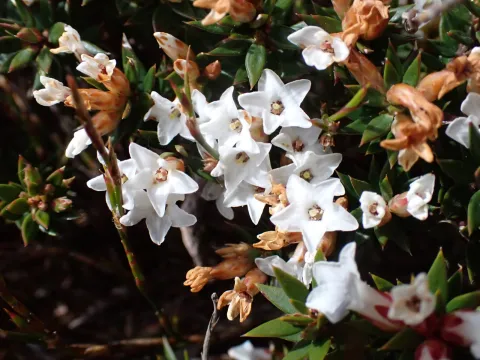
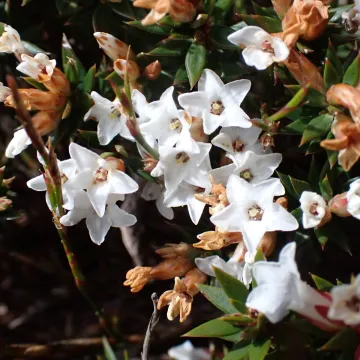
Botanically, this shrub exhibits a rigid, upright growth habit with small, lanceolate, and leathery leaves. Its most striking feature is the profusion of tubular white flowers that appear in long, elegant spikes. This blooming pattern contributes to its status as a sought-after ornamental species for specialized landscaping projects.
Agronomical success with this species depends on mimicking its native soil chemistry. Epacris paludosa requires an acidic soil pH (typically ranging from 4.5 to 5.5) and high levels of moisture. Unlike many plants, it requires constant humidity at the roots but also benefits from excellent drainage to prevent the root rot commonly associated with stagnant water in heavier, less permeable soil structures.
- Soil: Peat-based acidic substrate with sand admixture
- Light: Partial shade with protection from intense midday sun
- Moisture: Consistent watering with non-alkaline water
- Maintenance: Minimal pruning to maintain plant shape
The primary use of the swamp heath is in ornamental horticulture, specifically for planting near water features or in controlled peat gardens. The plant is susceptible to common pests such as spider mites, especially when air humidity is low, and is prone to root pathogens if the drainage system is compromised or if the soil pH becomes too alkaline.
Photo gallery