Epacris pulchella
Epacris pulchella
Description
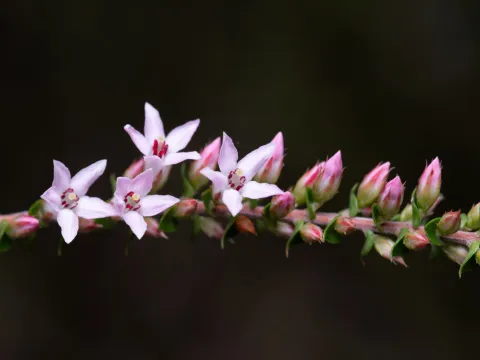
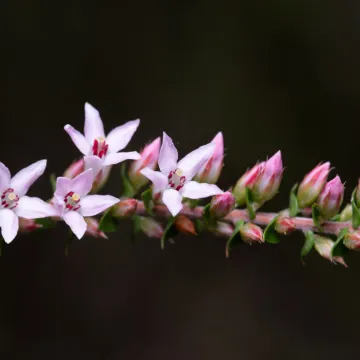
Epacris pulchella is a charming evergreen shrub that belongs to the Ericaceae family, commonly known as the heath family. This species is highly regarded for its aesthetic value, featuring dense, fine foliage and attractive, bell-shaped flowers that bloom in clusters along its upright stems.
The plant is native to Australia, particularly within the state of New South Wales. In its natural habitat, it thrives in sandy, well-drained soils and rocky terrain, typically found in open forest areas or heathlands. Because of these origins, it is well-adapted to environments that are somewhat nutrient-poor but require excellent drainage.
Botanically, Epacris pulchella is characterized by its stiff branches and small, pointed leaves. The flowers are typically white, sometimes tinged with soft pink, providing a delicate appearance during the flowering season. Its growth habit is naturally bushy, and it can be encouraged to become even more dense through careful pruning after the flowering period.
For cultivation, the primary requirement is a highly acidic, free-draining substrate. It is essential to avoid waterlogging, as the roots are sensitive to anaerobic conditions. While the plant enjoys sunny spots, it appreciates some protection from extreme afternoon heat in warmer climates. Fertilization should be handled with caution, using slow-release fertilizers specifically designed for native, sensitive plants.
This shrub is commonly utilized in rock gardens, native plant displays, or as a container plant for patios. It is relatively resistant to common pests, although it may occasionally suffer from mealybugs or spider mites if kept in poorly ventilated greenhouse conditions. Root rot, caused by heavy soil and excessive moisture, remains the most significant threat to its health.
Photo gallery