Ephedra equisetina
Ephedra equisetina Bunge
Description
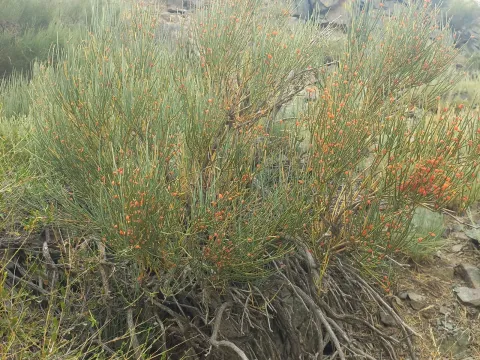
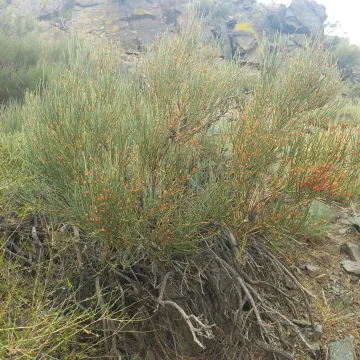
Ephedra equisetina Bunge, commonly known as joint pine, is a perennial evergreen shrub belonging to the family Ephedraceae. It is characterized by its jointed, upright, blue-green stems that resemble horsetails, often reaching heights of up to 1.5 meters. This relict plant species possesses unique physiological traits allowing it to thrive in arid and harsh mountainous environments.
The native habitat and natural range of the plant include the mountainous regions of Central Asia, Kazakhstan, Mongolia, and Western China. It is typically found on rocky slopes, cliffs, and stony scree. In agricultural practice, Ephedra equisetina is valued for its exceptional drought tolerance and its ability to flourish in nutrient-poor soils, though it remains highly susceptible to root rot caused by waterlogging.
To cultivate Ephedra equisetina successfully, establishing excellent soil drainage is paramount. The plant performs best in light, sandy, or loamy soils with a neutral to slightly alkaline pH. As a light-demanding species, it requires fully exposed locations with good air circulation, as even partial shading can significantly inhibit the development and concentration of active substances.
Agronomic management involves intensive weed control during the establishment phase and minimal irrigation during extreme drought periods. Propagation can be achieved through seeds or vegetative methods, such as crown division. Growers should account for the slow growth rate of the shrub, with the first commercial harvest of the green biomass typically occurring three to four years after planting.
The primary economic and agricultural importance of this crop lies in its pharmaceutical application. The stems serve as a primary source for the extraction of ephedrine, an alkaloid used in medications for asthma, hypotension, and nasal congestion. Additionally, the plant is increasingly used in xeriscaping and rock garden design due to its distinctive structural aesthetic and year-round greenery.
- Excellent cold hardiness, capable of surviving temperatures down to -30°C.
- Low susceptibility to common pests if kept in dry conditions.
- Minimal fertilizer requirements due to its adaptation to infertile soils.
Photo gallery