Ephedra foeminea
Ephedra foeminea
Description
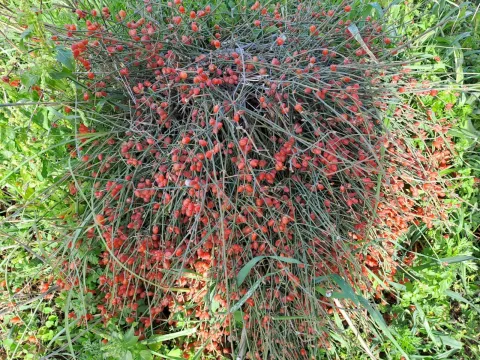
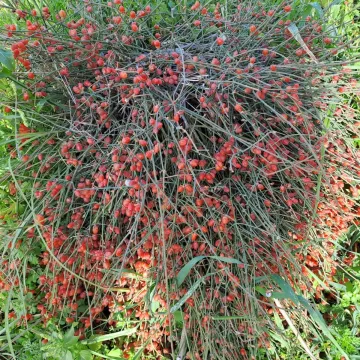
Ephedra foeminea is a perennial evergreen shrub belonging to the Ephedraceae family. Unlike typical conifers, this species is characterized by its jointed, photosynthetic stems that replace leaves in the metabolic process. It often grows as a straggling or semi-climbing shrub in its natural habitat.
The native range of Ephedra foeminea spans across the Mediterranean Basin, the Middle East, and parts of Southeastern Europe. It is a classic xerophyte, typically inhabiting rocky slopes, limestone crags, and arid regions where soil quality is generally poor and water availability is restricted.
Botanically, the plant is dioecious, meaning male and female cones are produced on separate individuals. This reproductive feature is critical for agronomic planning, as both sexes must be present if seed production is a goal of the cultivation site. The plant's structure allows it to thrive in high-stress, low-moisture environments.
Cultivation requirements include a well-drained, alkaline, and gritty soil composition. Water management is the most important aspect of its agrotechnology; excessive irrigation or poor drainage will almost certainly lead to root rot and eventual plant death. It requires full sunlight to maintain its structural integrity and health.
Economically, Ephedra foeminea is valued primarily for its bioactive alkaloids used in pharmacological preparations. In agricultural settings, it is also utilized for land stabilization in arid areas and xeriscaping. Common pests include aphids and mites, and the primary disease threat is fungal root rot caused by poor moisture control.
Photo gallery