Intermediate ephedra
Ephedra intermedia
Description
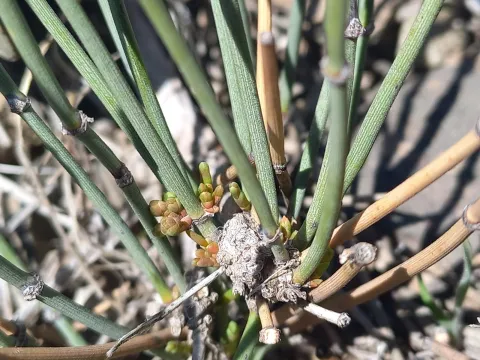
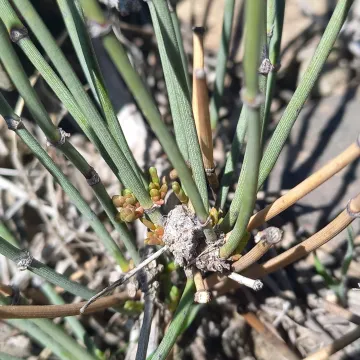
Intermediate ephedra (Ephedra intermedia) is a perennial shrub belonging to the Ephedraceae family. Unlike typical angiosperms, it is a gymnosperm characterized by jointed, photosynthetic green stems and reduced, scale-like leaves. Its unique physiology allows it to thrive in harsh, arid environments where other vegetation often fails to establish.
The origin of this species is traced to the dry, mountainous regions and semi-deserts of Central Asia. It is naturally distributed in regions with limited rainfall and high temperature fluctuations. Agricultural cultivation of this species is highly specialized, focusing on maintaining conditions that mimic its natural habitat to ensure the high concentration of bioactive compounds.
Botanically, the plant is dioecious, meaning male and female cones develop on separate individuals. It has a slow growth rate and can reach a height of up to one meter. The deep root system is highly efficient at extracting water from rocky substrates, which is a critical adaptation for survival in poor, porous soils with minimal organic matter.
To cultivate Intermediate ephedra successfully, an agronomist must focus on strict moisture management. Essential requirements include:
- Excellent drainage to prevent root rot.
- Full sun exposure for maximum photosynthesis.
- Low-nitrogen soil composition to prevent rapid, weak growth.
- Minimal human intervention beyond initial establishment.
The primary economic value of this crop lies in its secondary metabolites, specifically ephedrine and pseudoephedrine, which are extracted for pharmaceutical use in respiratory medicine. The crop is relatively resistant to common pests, but fungal infections like root rot can occur if soil aeration is poor. Maintaining proper spacing and avoiding heavy irrigation are the best strategies for ensuring healthy yields.
Photo gallery