Ephedra minima
Ephedra minima
Description
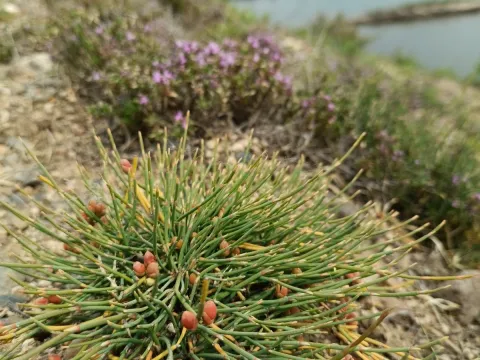
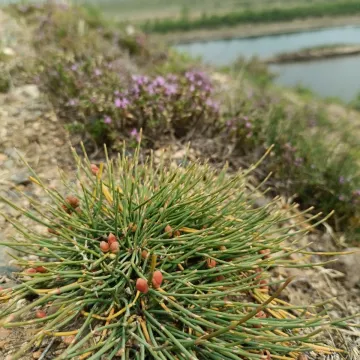
Ephedra minima is a distinct species of dwarf shrub belonging to the family Ephedraceae. Unlike typical shrubs that reach significant heights, this species is noted for its prostrate, cushion-forming growth habit, making it perfectly suited for extreme environments found at high altitudes.
The plant originates from the mountainous regions of Central Asia, where it thrives on rocky slopes and alpine screes. Its natural habitat is characterized by extreme temperature fluctuations and intense UV radiation, which have shaped the plant's resilience and its specific physiological adaptations to survive with minimal water availability.
Botanically, Ephedra minima consists of segmented green stems that perform photosynthesis, as its true leaves are reduced to tiny, scale-like structures. Its root system is disproportionately large, acting as a vital anchor in rocky substrates and allowing the plant to tap into deep mineral sources and moisture pockets inaccessible to other flora.
Cultivation requirements focus on mimicking its native harsh environment. The soil must be exceptionally well-draining, preferably a mineral mix of gravel and coarse sand. It is highly intolerant of organic-rich, heavy soils that retain moisture, as these conditions rapidly lead to root rot and other pathogenic issues.
Economically, the plant is primarily researched for its chemical composition, specifically the presence of active alkaloids with medicinal applications. Furthermore, it is gaining popularity in xeriscaping and rock gardening due to its unique, compact architectural appearance and its ability to maintain color and structure throughout the year.
- Extreme drought tolerance.
- Cold hardy in high-altitude conditions.
- Full sun requirements.
- Slow maturation rate.
The plant is generally robust, but susceptibility to fungal pathogens increases significantly if humidity levels are too high. Integrated pest management should focus on preventing waterlogging, as most pests, such as aphids or scale insects, only become problematic when the plant's defense mechanisms are weakened by suboptimal care.
Photo gallery