Single-seed jointfir
Ephedra monosperma
Description
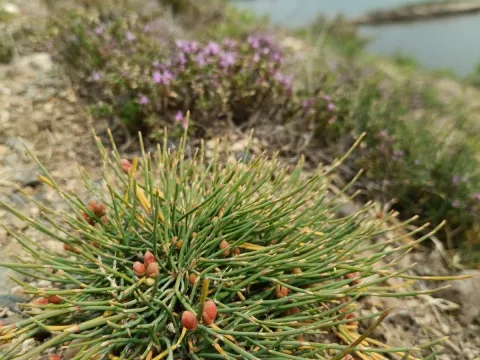
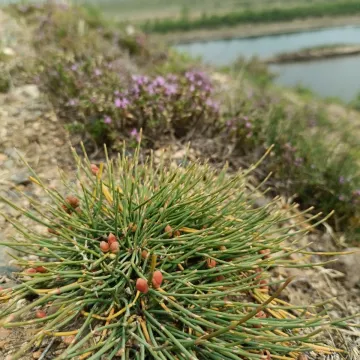
Single-seed jointfir (Latin: Ephedra monosperma) is a perennial subshrub belonging to the Ephedraceae family. It is a compact, prostrate-growing plant known for its remarkable ability to thrive in extreme environmental conditions, making it an interesting subject for specialized agricultural production.
The plant originates from the arid regions of Eastern Siberia, Mongolia, and Northern China. Due to its evolutionary history in stony slopes and high-altitude steppes, it is well-adapted to poor, rocky soils and significant temperature fluctuations, which dictates its preference for specific ecological niches during cultivation.
Botanically, it features highly branched, woody stems with small, scale-like leaves that significantly reduce water loss. It is a dioecious species that produces characteristic, fleshy, bright red cones (often mistaken for berries). These structures play a crucial role in its reproductive cycle and provide a distinct aesthetic look.
Agronomic requirements for Ephedra monosperma focus on excellent soil drainage and full sun exposure. The plant does not tolerate waterlogging, which can cause root decay. Cultivation on loose, gravelly, or sandy soils is preferred. Irrigation should be restricted to periods of severe drought once the plant is established.
The primary economic value of this crop lies in the pharmaceutical industry. It is a known source of ephedrine and pseudoephedrine alkaloids, which are widely utilized in medicine as bronchodilators and decongestants. In addition to medicinal use, it is a valuable plant for erosion control in dry, rocky landscape management projects.
- Excellent drought tolerance.
- High winter hardiness.
- Low soil nutrient requirements.
- Minimal disease pressure from standard agricultural pests.
Photo gallery