Ephedra trifurca
Ephedra trifurca
Description
Ephedra trifurca, commonly known as the long-leaf jointfir or Mexican tea, is a perennial shrub belonging to the Ephedraceae family. This species is a true xerophyte, characterized by its remarkable ability to thrive in extremely arid desert environments. As a specialized agricultural crop, it is cultivated primarily in regions where traditional plant species fail due to water scarcity.
The native range of this plant includes the arid landscapes of the southwestern United States and northern Mexico. It is typically found in desert scrub, rocky slopes, and sandy flats. Its natural habitat is defined by high temperatures and erratic, low rainfall, allowing the plant to form stable populations that prevent soil erosion in harsh desert terrains.
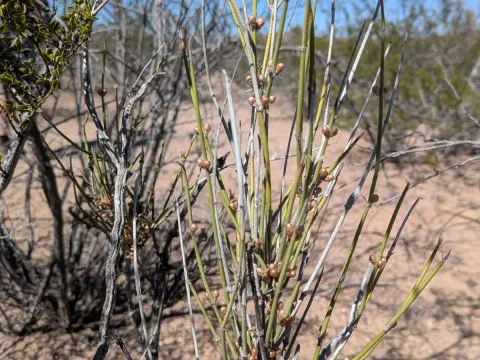
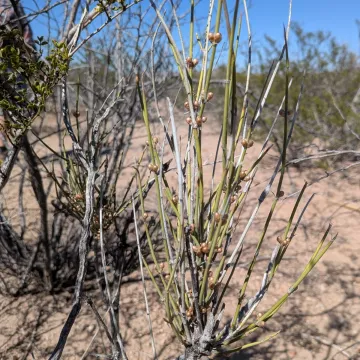
Botanically, the plant features slender, rigid, green photosynthetic stems, while its leaves are reduced to minute, scale-like structures. It develops an extensive root system that enables it to tap into moisture deep beneath the surface. The plant produces distinctive fleshy cones that mature into seeds, facilitating its reproduction in environments where water is a limiting factor for most vegetation.
Agricultural management of Ephedra trifurca requires well-drained, sandy, or rocky soil with low nutrient levels. Over-irrigation is the primary cause of plant death, as it invites fungal infections and root rot. Successful cultivation relies on high UV exposure and low humidity levels. Growers must replicate these harsh conditions to ensure the production of the desired chemical compounds.
The primary economic use of this plant is found in the pharmaceutical industry, as it serves as a botanical source for certain secondary metabolites. Furthermore, it is increasingly popular in xeriscaping and sustainable landscaping, where its aesthetic appearance and minimal water requirements make it an excellent choice for environmental conservation projects in dry-climate regions.
Photo gallery