Green ephedra
Ephedra viridis
Description
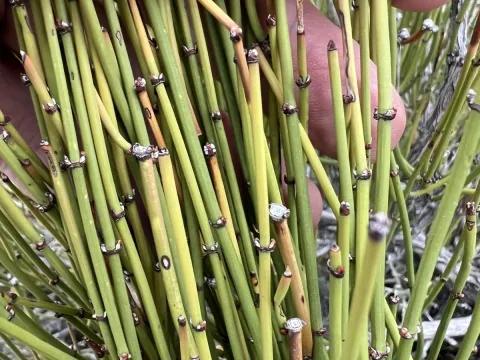
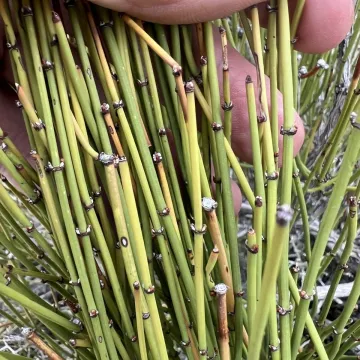
Green ephedra (Ephedra viridis) is a perennial evergreen shrub belonging to the Ephedraceae family. This primitive gymnosperm is characterized by its jointed, bright green stems that perform photosynthesis, as true leaves are reduced to small, scale-like structures along the nodes.
The native habitat of this plant includes the western regions of North America, particularly mountainous terrains and arid plateaus. It has evolved to thrive in harsh environments, making it a highly resilient species capable of colonizing rocky slopes and limestone soils where other vegetation struggles to survive.
Botanically, Ephedra viridis is recognized for its significant drought tolerance and structural adaptability. The plant typically reaches heights of 30 to 100 cm, forming dense, shrubby clumps. It is dioecious, meaning male and female reproductive cones are produced on separate plants, which is a crucial factor to consider for seed production and agricultural planning.
Successful cultivation of green ephedra requires well-drained, porous soil with a neutral or slightly alkaline pH. The plant is extremely susceptible to root rot caused by stagnant water, so careful site selection and the avoidance of over-irrigation are vital aspects of its agrotechnology. It requires almost no fertilization and is remarkably hardy against typical agricultural pests.
The primary economic use of this species is within the pharmaceutical industry due to the presence of specific bioactive alkaloids in its green stems. Beyond medicinal applications, green ephedra is valued in sustainable agriculture and landscaping for its erosion-control properties, as its extensive root system effectively stabilizes loose, dry soils on hillsides.
- Exceptional resilience to extreme arid conditions.
- Thrives in low-nutrient, stony soil environments.
- Minimal maintenance and labor requirements.
- Excellent suitability for xeriscaping and soil stabilization.
Photo gallery