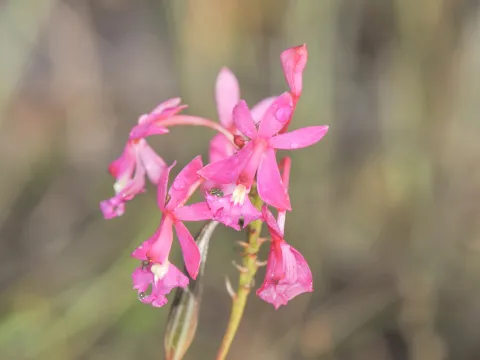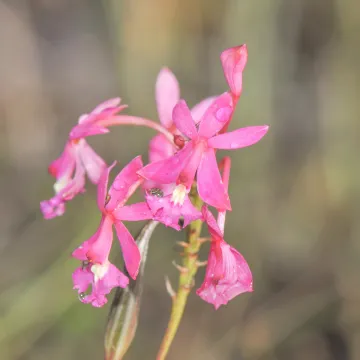
Epidendrum ibaguense
Epidendrum ibaguense Kunth
Description
Epidendrum ibaguense is a perennial herbaceous plant belonging to the Orchidaceae family. Often referred to as the "crucifix orchid," this species is characterized by its reed-like stems and vibrant, long-lasting flower clusters. It is one of the most resilient orchids, known for its ability to thrive under various controlled environments.
Native to the tropical regions of Central and South America, particularly Colombia and surrounding areas, this orchid naturally grows as an epiphyte or lithophyte on rocky slopes. This evolutionary background makes the plant highly adaptable to strong sunlight, which is a fundamental requirement for successful cultivation in both greenhouses and domestic settings.
Botanically, the plant features firm, leathery leaves arranged along erect stems. The flowers form dense racemes at the top of the stalks, showcasing a spectrum of colors ranging from vivid orange and red to pink and yellow. The root system is robust and capable of thriving in open, well-aerated potting media, often requiring space for optimal nutrient absorption.
Agricultural and horticultural management centers on replicating its native climate. The plant demands bright, direct or slightly filtered light to maintain vigor. A coarse, well-draining substrate—typically a mix of pine bark, charcoal, and perlite—is essential to prevent root decay. Temperature control is vital, with a preferred range of 18°C to 28°C to ensure steady development.
- Placement in high-light locations to promote flowering.
- Use of specialized orchid fertilizers during the active growing phase.
- Prevention of waterlogging through proper drainage systems.
- Monitoring for common pests like scale insects and spider mites.
- Regular sanitation of growing tools to prevent fungal outbreaks.
The primary utility of Epidendrum ibaguense lies in the ornamental plant trade. It is widely cultivated for greenhouse displays, interior landscaping, and as a popular choice for hobbyist orchid collections. Furthermore, it serves as a foundational species in breeding programs, contributing to the development of robust hybrids that retain the species' distinctive hardiness and vibrant color palette.
Photo gallery