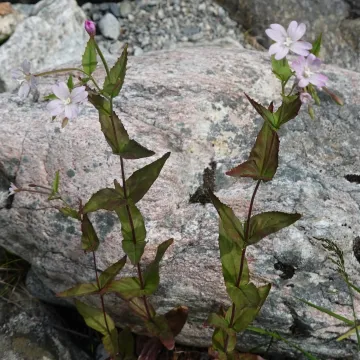

Hill willowherb
Epilobium collinum
Description
Hill willowherb (Epilobium collinum) is a perennial herbaceous plant belonging to the Onagraceae family. As an agricultural and botanical object, it is recognized for its adaptive capabilities in various environments, often acting as a pioneer species on disturbed lands and mountainous slopes.
The origin of this species is linked to the temperate zones of Eurasia. It is widely distributed across Europe, the Caucasus, and parts of Siberia. The plant is typically found in well-drained, hilly areas, rocky outcrops, and forest edges, showcasing a natural resilience to varying moisture levels and nutrient availability.
Botanically, it features an erect stem that can branch near the apex, adorned with alternate, sessile leaves. The flowers are small, characterized by their pinkish-purple petals, and are typical of the Epilobium genus. Its root system is developed enough to stabilize the plant in thin mountain soils, contributing to its durability as a perennial.
Regarding agronomic requirements, the crop favors well-aerated, sandy, or loamy soils with a neutral pH level. It is highly photophilous and thrives in full sunlight. Cultivation practices include spring seeding into prepared soil beds. Proper soil moisture management is essential during the early vegetative stage, although the plant becomes significantly drought-tolerant once established.
The primary economic value of the hill willowherb lies in its potential medicinal applications and role in ecological restoration. The plant contains various secondary metabolites of interest for the pharmaceutical industry. Typical pests and diseases include aphids, spider mites, and rust fungi, which are managed through careful field monitoring and balanced application of biological crop protection agents.
Photo gallery