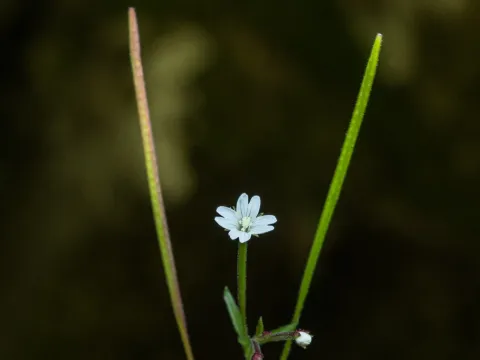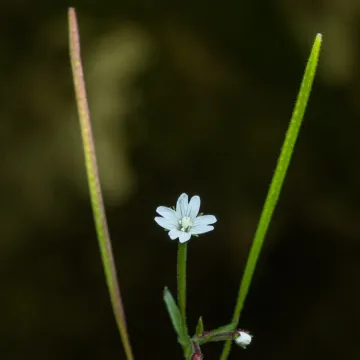
White-flower willowherb
Epilobium lactiflorum
Description
The white-flower willowherb (Epilobium lactiflorum) is a perennial herbaceous plant belonging to the Onagraceae family. It is a distinct species characterized by its delicate, white to pale pink flowers and compact growth habit, distinguishing it from taller, more common willowherb species.
This species is native to high-latitude and alpine regions of the Northern Hemisphere, including parts of North America, Europe, and Asia. It is primarily found in subarctic and arctic climates, often thriving in niches where other vegetation struggles due to cold temperatures and short growing seasons.
Botanically, it features simple, lanceolate leaves and a stem that typically reaches 30 to 50 cm in height. The inflorescence is a terminal raceme that blooms during the peak of the short northern summer. The plant relies on its moderate rhizomatous system to persist in challenging, often rocky or gravelly substrates.
Cultivation requirements involve mimicking its natural environment: cool temperatures, high humidity, and acidic, well-drained soil. In an agricultural or horticultural setting, the plant requires consistent moisture but is highly susceptible to root rot if the growing medium becomes waterlogged or stagnant.
While not a major commercial crop, the white-flower willowherb holds potential in specialized botanical research and alpine gardening. It is generally resistant to common garden pests, though aphids can be a concern in protected environments. Its hardiness makes it a subject of interest for breeding programs aimed at extreme-climate agriculture.
- Excellent cold tolerance
- Preference for acidic soils
- Low maintenance in suitable climates
Photo gallery