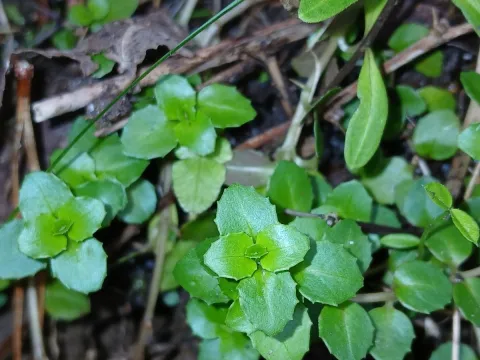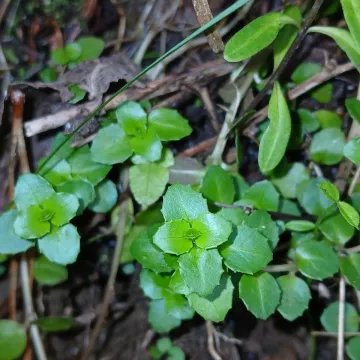
Stalked willowherb
Epilobium pedunculare
Description
Stalked willowherb (Epilobium pedunculare) is a perennial herbaceous plant belonging to the Onagraceae family. In an agricultural and horticultural context, it is recognized not for commercial crop yields in the traditional sense, but as a specialized groundcover plant valued for its ability to create dense, low-growing mats in garden environments.
The species is native to New Zealand, where it typically inhabits moist, riparian zones, wet rocky crevices, and alpine meadows. Its natural distribution across diverse ecological niches has contributed to its adaptability, allowing it to be cultivated successfully in temperate regions worldwide, particularly in gardens that feature boggy areas or damp, shaded borders.
Botanically, this plant is characterized by its prostrate stems that spread horizontally and root at the nodes upon contact with moist substrate. Its small, opposite leaves form a uniform canopy, while the flowers, borne on long peduncles, emerge to add significant ornamental value. This vegetative propagation strategy makes it highly effective at suppressing common agricultural weeds in its vicinity.
Regarding cultivation, Epilobium pedunculare requires specific conditions to thrive. It favors rich, moisture-retentive soils with high organic content. While it is relatively low-maintenance, a strict irrigation regime is essential during dry spells. In terms of garden management, it is important to monitor its spread, as its aggressive growth habit can lead to it becoming invasive in ideal conditions if not contained properly.
- Requires consistent soil moisture.
- Prefers partial shade for optimal health.
- Can be propagated easily by division or cuttings.
- Highly resilient to frost but requires good drainage.
The plant generally suffers from few pests or diseases, provided it is grown in the correct environment. Over-saturation in poorly drained areas can lead to root rot, which is the most frequent issue encountered by growers. Monitoring for typical garden pests like aphids is recommended, although systemic chemical intervention is rarely necessary for this resilient ornamental species.
Photo gallery