
Pale willowherb
Epilobium roseum
Description
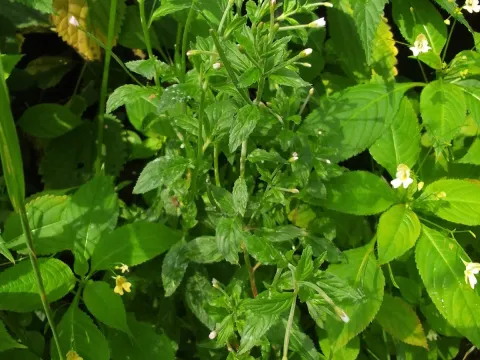
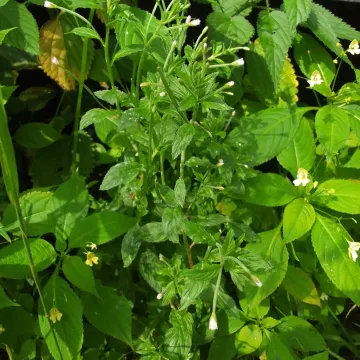
Pale willowherb (Latin Epilobium roseum) is a herbaceous perennial plant belonging to the Onagraceae family. While often categorized as a wild or ruderal species, it possesses specific botanical traits that make it a significant subject for ecological study and, in some cases, an agricultural consideration due to its impact on soil moisture and local biodiversity.
The origin of this species is traced back to the temperate regions of Europe and Asia. Its natural habitat includes damp meadows, stream banks, ditches, and disturbed grounds. The plant has successfully adapted to a wide range of environments, demonstrating high resilience in conditions where other competing species struggle to thrive.
Botanically, Epilobium roseum features an upright, often branching stem reaching up to 80 centimeters in height. Its leaves are opposite, serrated, and lanceolate, while the flowers are small, pale pink to white in color. The root system is relatively shallow but highly effective at securing the plant in moist substrates, facilitating both clonal growth and rapid stabilization of the soil surface.
Agronomically, the plant thrives in rich, consistently moist, and neutral to slightly acidic soils. It does not tolerate prolonged droughts or extreme soil compaction. If managed as a crop or an indicator species, it requires careful monitoring of the water table. Its ability to spread makes it a species that can quickly colonize wet agricultural zones if not controlled.
In terms of practical use, the plant contributes to nectar production for local pollinators and can serve in phytoremediation efforts for marshy areas. Typical pests include aphids and leaf-feeding beetles, which can significantly damage the foliage if left unchecked. Common diseases affecting this species involve various rust fungi (Puccinia spp.), which thrive in the humid, sheltered microclimates preferred by the plant.
Photo gallery