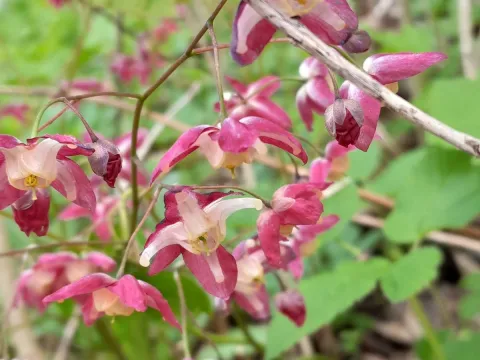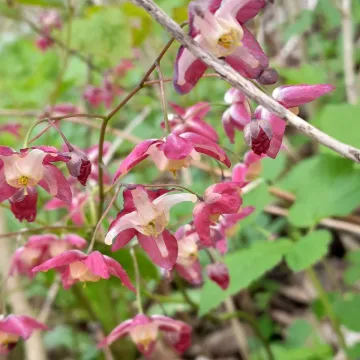
Red barrenwort
Epimedium rubrum
Description
Red barrenwort (Epimedium rubrum) is a perennial herbaceous plant belonging to the Berberidaceae family. It is a well-known hybrid, favored by horticulturists for its extreme durability and aesthetic value as a ground cover. The plant maintains a refined appearance throughout the growing season, making it a staple in various landscape applications.
Originally derived from parent species native to the mountainous regions of Asia and Europe, Epimedium rubrum has become a common ornamental crop in temperate regions worldwide. Its natural habitat suggests a preference for woodland environments, which translates well to modern garden settings that require shade-loving, reliable vegetation.
The plant features creeping rhizomes that allow it to form dense mats, typically reaching 30 to 40 centimeters in height. Its foliage is notable for its leathery texture and seasonal color shifts: starting with a bronze-red hue in the spring, transitioning to dark green during the summer, and often showing reddish tones again before autumn dormancy.
To ensure optimal growth, Red barrenwort should be planted in partial to full shade with protection from harsh afternoon sun. The soil must be fertile, well-draining, and rich in organic matter to support the rhizomatous root system. Standard agrotechnical practices include maintaining consistent soil moisture, applying organic mulch to preserve root health, and removing old foliage in late winter or early spring to facilitate new growth.
- Excellent winter hardiness in temperate climates.
- Minimal maintenance once established in the landscape.
- High resistance to most common garden pests and diseases.
- Ability to suppress invasive weed growth effectively.
In terms of agricultural and horticultural utility, Red barrenwort is primarily valued for its role in ornamental landscaping. It serves as an excellent ground cover for shaded areas, dry shade under trees, and border plantings. Given its resilience, it is rarely impacted by severe diseases or pests, provided that drainage is adequate and the soil is not overly waterlogged or excessively dry.
Photo gallery