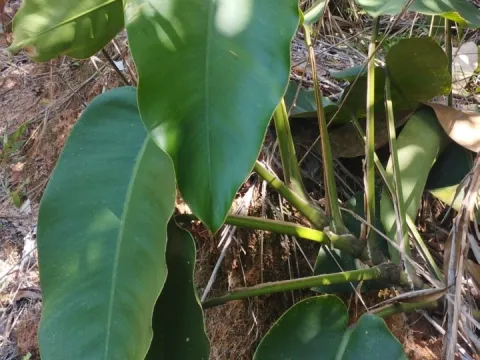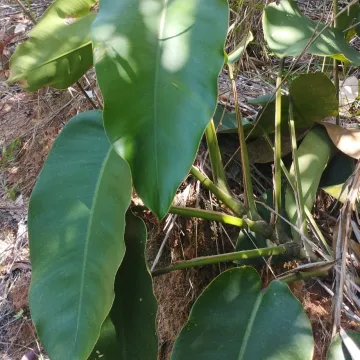
Giant pothos
Epipremnum giganteum
Description
The Giant Pothos (Epipremnum giganteum) is a robust climbing vine belonging to the Araceae family. Known for its exceptionally large, leathery leaves, it is a prominent species in tropical agriculture and ornamental horticulture. The plant is prized for its ability to create dense vertical greenery in environments that mimic its native tropical habitat.
Originating from the tropical rainforests of Southeast Asia, this species thrives in high-humidity areas with stable, warm temperatures. In its natural range, it functions as an epiphyte, using its aerial roots to ascend large forest trees. Agronomic management of this species requires replication of these canopy conditions to ensure optimal leaf development and overall plant health.
Botanically, the plant features a thick, woody stem and broad leaves that can reach substantial lengths under ideal conditions. The foliage is deep green with a glossy texture, capable of photosynthesizing efficiently in low-to-moderate light conditions. Its root system is divided into subterranean roots for nutrient uptake and aerial roots, which act as mechanical anchors for its climbing habit.
Cultivation requirements involve the use of well-draining, nutrient-rich, acidic soil mixtures. The species is highly sensitive to root rot caused by stagnant water, making drainage a critical aspect of its care. It prefers bright, indirect sunlight, as harsh solar radiation can damage the leaf surface. Consistent ambient humidity is essential for maintaining the plant's structural integrity and preventing tissue necrosis.
The primary agricultural and horticultural use for the Giant Pothos is vertical landscaping and interior decor. Common pests include spider mites, mealybugs, and scale insects, which typically thrive in dry indoor environments.
- Requires strong vertical support structures.
- Prefers temperatures between 20°C and 30°C.
- Propagated effectively via stem cuttings with nodes.
- Sensitive to cold drafts and rapid temperature fluctuations.
Photo gallery