Dyce's horsetail
Equisetum dycei
Description
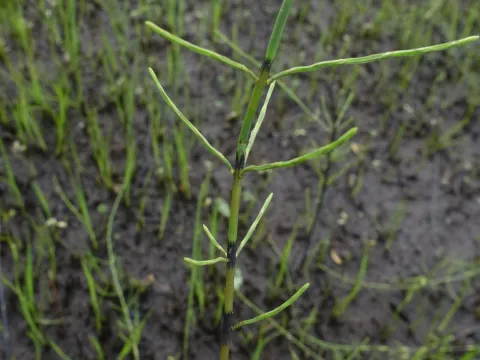
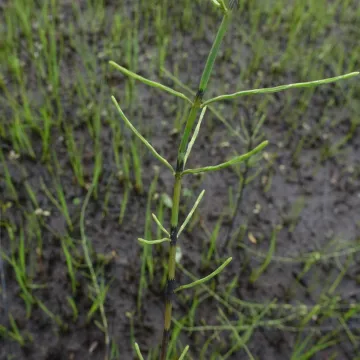
Dyce's horsetail (Equisetum dycei) is a recognized hybrid between Equisetum arvense and Equisetum palustre. As a member of the Equisetaceae family, it displays a combination of traits from its parental species. This plant serves as an interesting case study for botanists tracking natural hybridization within the pteridophytes group.
The species has a limited geographic range, predominantly found in areas of Scotland and parts of Europe where its parent species coexist. It typically colonizes wetland environments, marshes, and damp meadows, showing a high preference for sites with high moisture content and specific soil chemistry.
Botanically, Equisetum dycei features a rhizomatous system that allows it to persist for many years. Its stems are characterized by high silica content, contributing to their rigid structure. Unlike some other ferns, its propagation relies heavily on the expansion of underground stems, as the spores produced by such hybrids are often sterile or show reduced viability.
In terms of agricultural management, this plant is not considered a crop but rather a botanical curiosity that may appear in wet pastures. It indicates that the soil may require drainage improvements. Agronomists often recommend soil pH adjustment through liming and proper field drainage as the primary methods to manage or exclude this plant from commercial grazing fields.
Economic utility is negligible, and like many horsetails, it can pose toxicity risks to livestock if consumed in large quantities due to the presence of thiaminase or alkaloids. Its presence in agricultural fields should be monitored, and control strategies should be focused on preventing the spread through vegetative parts during tillage operations.
Photo gallery