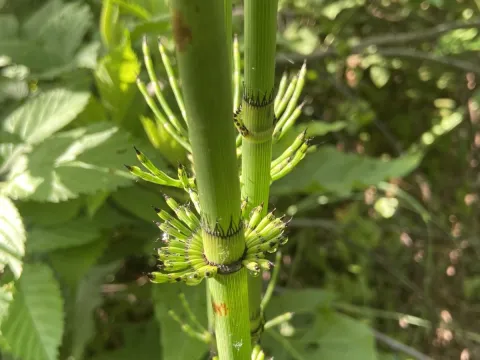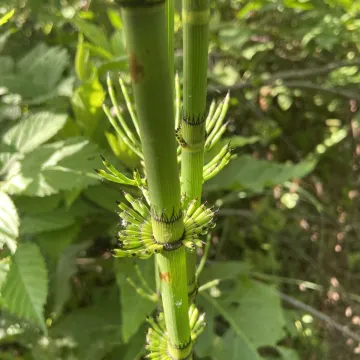
Giant horsetail
Equisetum giganteum
Description
Giant horsetail (Equisetum giganteum) is a remarkable perennial spore-bearing plant belonging to the family Equisetaceae. It is distinguished by its impressive size, often reaching heights of several meters, making it one of the largest species within the genus. The stems are characterized by high silica content, which gives them a woody texture and structural rigidity that is quite distinct from smaller, temperate horsetail species.
The plant originates from the warmer regions of South and Central America, where it thrives in humid habitats such as riverbanks, wetlands, and tropical forests. Unlike common field horsetails, this species requires a specific microclimate, limiting its outdoor agricultural use to regions that mimic its natural tropical or subtropical environment. It is widely recognized as a botanical curiosity in botanical gardens and specialized landscapes.
From a botanical perspective, the plant consists of hollow, jointed stems with whorls of lateral branches. The leaves are reduced to simple sheaths at the nodes. The underground system consists of deep, spreading rhizomes that facilitate vigorous growth. Because of its rapid spreading habit, giant horsetail is often grown in containers or restricted areas to prevent it from becoming invasive in garden settings.
In terms of cultivation, giant horsetail thrives in consistently moist to wet soils and requires plenty of sunlight. It is best suited for marshy conditions or near water features where the soil remains saturated throughout the growing season. While it is adaptable to various soil types, a rich, slightly acidic or neutral substrate with high organic content provides the best conditions for achieving maximum height and vigor.
- Ornamental use for tropical landscape architecture.
- Bio-remediation potential in aquatic systems.
- Source of bioactive compounds for pharmacological research.
- Use in water gardening and pond margins.
Due to the high silica concentration in its tissues, giant horsetail is naturally resistant to many insect pests that typically plague softer vegetation. However, plants kept in enclosed or poorly ventilated spaces may occasionally face challenges such as fungal pathogens or mild aphid infestations. Maintaining high air circulation and avoiding overhead watering in cool conditions helps to prevent common leaf-spot diseases.
Photo gallery