Smooth scouring rush
Equisetum laevigatum
Description
Smooth scouring rush (Equisetum laevigatum) is a perennial vascular plant belonging to the Equisetaceae family. Often recognized for its distinct, reed-like appearance, it is primarily found in wetland environments and sandy alluvial plains. While not a commercial crop in the traditional sense, it is an essential species in ecological studies and land management.
Native to North America, the species thrives in a wide range of habitats across the continent, extending from the southern reaches of Canada down into Mexico. It is most frequently encountered in moist soils along river banks, irrigation ditches, and marshes. Its ability to thrive in disturbed sites makes it a highly resilient colonizer of damp, open landscapes.
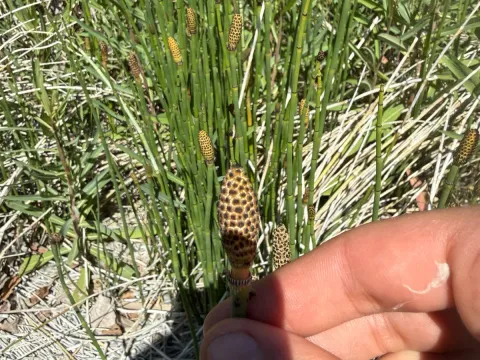
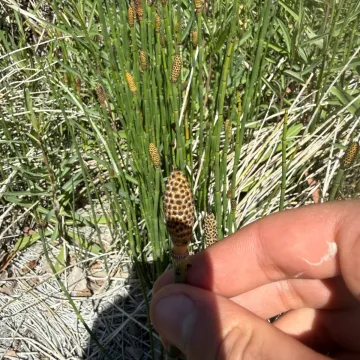
The botanical structure of this species is defined by its smooth, evergreen-like stems that often lack side branches, reaching heights of up to one meter. The plant features an extensive underground rhizome system that acts as a storage organ, allowing it to regenerate rapidly after grazing, fire, or mechanical disturbances. Reproduction occurs via spores produced in terminal cones.
Regarding cultivation and habitat requirements, the plant demands high soil moisture and typically favors sandy or silty substrates. It is highly adaptive to various pH levels and can withstand temporary flooding. In agricultural settings, it is often viewed as a persistent weed due to its aggressive rhizome spread, requiring intensive soil management or systemic control methods for eradication.
The economic utility of the plant is limited. Historically, some Equisetum species were used for scouring due to their high silica content. However, in modern agriculture, it is often considered a nuisance in pasture management because it can be toxic to livestock if ingested in significant quantities. Its primary value today lies in landscape restoration and use in rain gardens or aquatic garden designs.
- Perennial rhizomatous growth
- High silica content in stems
- Preference for moist, sandy soil
- Ability to thrive in disturbed ecosystems
- Toxicity risks for grazing livestock
Photo gallery