Variegated horsetail
Equisetum variegatum
Description
Variegated horsetail (Latin: Equisetum variegatum) is a perennial, spore-bearing plant belonging to the Equisetaceae family. Unlike its taller relatives, this species is noted for its compact size and slender, elegant stems, making it a specialized plant for moist, open environments.
The plant has a broad natural range covering the temperate and arctic regions of the Northern Hemisphere. It thrives in diverse habitats, including riverbanks, sandy shores, and alpine meadows. Because it is highly adaptable, it is often found in areas where water levels fluctuate or in nutrient-poor substrates, serving as a key pioneer species in such regions.
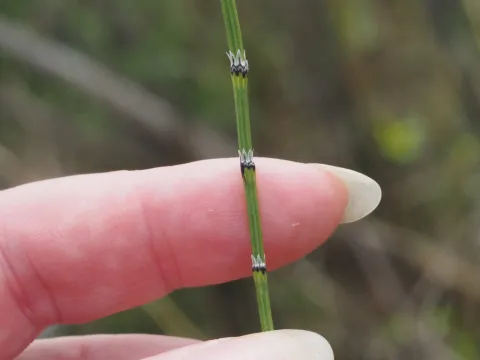
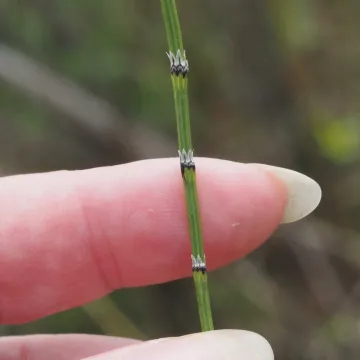
Botanically, Equisetum variegatum is distinguished by its thin, dark green stems that feature distinct white-sheathed nodes. These stems are evergreen in many climates and are remarkably rough due to the accumulation of silica. The rhizome system is expansive, enabling the plant to spread effectively through wet ground and create dense, decorative colonies.
To cultivate variegated horsetail successfully, one must replicate its natural moisture-rich conditions. It prefers full sun or partial shade and requires a consistently damp, well-drained substrate, such as sand or fine gravel. It is generally tolerant of a wide range of temperatures, making it a reliable choice for cold-climate gardens where other aquatic plants might fail.
The primary uses for variegated horsetail in modern agriculture and horticulture include:
- Enhancing the aesthetic appeal of water gardens and naturalistic ponds.
- Functioning as a biological filter component in aquatic cleaning systems.
- Providing ground cover in moist rock gardens or high-humidity landscape zones.
- Serving as an indicator species in ecological monitoring of wetlands.
One of the most significant advantages of this species is its natural resilience. Due to the high silica content in its tissues, the plant is rarely bothered by pests or severe diseases. As long as the plant is provided with adequate moisture and good water quality, it remains a low-maintenance, vigorous grower that contributes significantly to the visual and biological value of its planting site.
Photo gallery