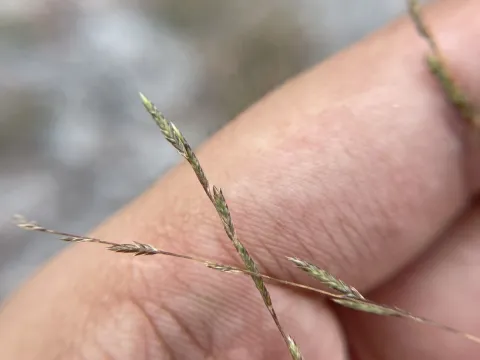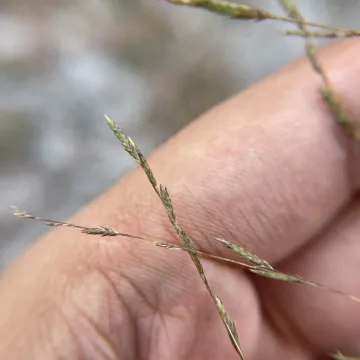
Sharp lovegrass
Eragrostis acuta
Description
Sharp lovegrass (Eragrostis acuta) is a perennial grass species belonging to the Poaceae family. This crop is recognized for its significant role in natural grasslands, exhibiting robust adaptation to challenging environmental conditions and the ability to maintain biomass production under arid climatic constraints.
The plant originates from the tropical and subtropical regions of Africa, where it has evolved to thrive in hot, dry environments. Its natural distribution is largely concentrated in open habitats characterized by nutrient-poor soils and limited annual rainfall, making it an excellent candidate for agricultural use in similar semi-arid zones across the globe.
Botanically, the species is defined by its erect stems and narrow, sharply pointed leaves, which effectively reduce transpiration. Its root system is deep and fibrous, facilitating efficient nutrient and moisture uptake while providing soil stability. The plant produces panicle inflorescences that ensure prolific seed distribution, contributing to its persistence in diverse ecosystems.
Agricultural success with Eragrostis acuta depends on soil selection; it performs best in well-drained sandy or sandy-loam substrates. Agronomic management involves careful monitoring of soil moisture, as waterlogging can severely inhibit root development. The species generally responds well to balanced fertilization, though it maintains a high degree of productivity even with low inputs.
The primary agricultural applications for Sharp lovegrass include:
- Forage production for grazing livestock in arid environments.
- Restoration of degraded lands through soil erosion control.
- Utilization as a drought-tolerant component in forage mixtures.
- Integration into sustainable land management and conservation systems.
Common pests include various species of grasshoppers and leaf-eating insects that may impact foliage density during the peak growing season. Pathologically, the crop is susceptible to fungal diseases such as leaf rust and leaf blight, particularly when environmental humidity is high for extended periods, necessitating careful site selection and spacing to ensure adequate airflow.
Photo gallery