Eragrostis airoides
Eragrostis airoides
Description
Eragrostis airoides is a perennial grass species belonging to the Poaceae family. It is recognized in the agricultural sector as a resilient crop, specifically valued for its ability to thrive in arid and semi-arid environments where water availability is a major limiting factor for more sensitive forage plants.
The species is native to dryland habitats in the Americas, particularly within prairie and steppe regions. Its distribution is closely linked to environments with irregular precipitation patterns. Currently, it is widely utilized in land restoration projects, serving as a critical tool for soil stabilization and the prevention of desertification in degraded pastoral areas.
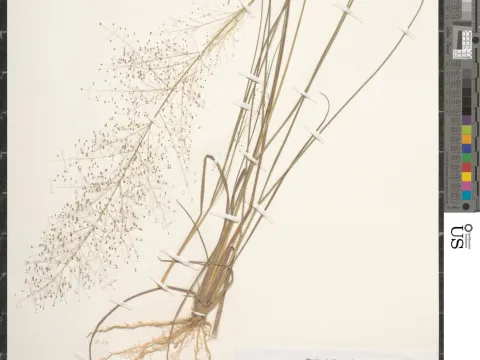
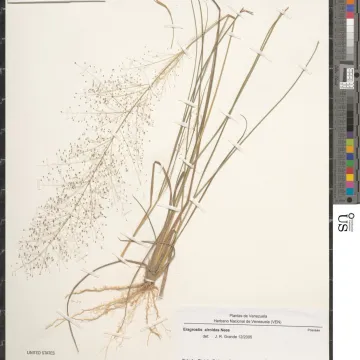
Botanically, this grass features a deep and expansive root system, which is its primary adaptation for extracting moisture from deeper soil layers. The culms are slender and erect, supporting narrow, lanceolate leaves. The inflorescence is a loose, open panicle that effectively disperses seeds through wind action, ensuring rapid colonization of open ground.
In terms of agricultural requirements, Eragrostis airoides prefers well-drained, sandy or gravelly soils. It exhibits excellent tolerance to extreme heat and high solar radiation. While it does not require significant fertilization, it responds well to light nitrogen applications, which can boost biomass production during the growing season.
The economic utility of this crop is primarily focused on livestock forage and soil conservation efforts. Key agricultural practices for successful establishment include:
- Surface seeding followed by light soil disturbance to ensure contact.
- Rotational grazing to prevent over-utilization and maintain plant vigor.
- Integration into erosion control buffers in vulnerable landscapes.
- Monitoring for drought stress to optimize the timing of hay harvesting.
Regarding pest and disease resistance, this grass is generally robust. Major issues are infrequent but may include rust fungi under conditions of persistent high humidity or infestation by sap-sucking insects in specific localized patches. Implementing appropriate field hygiene and maintaining biodiversity within the pasture are the most effective strategies for long-term health.
Photo gallery