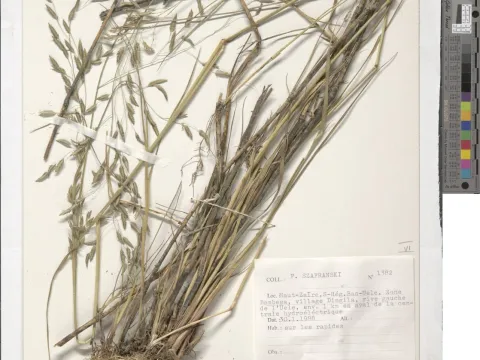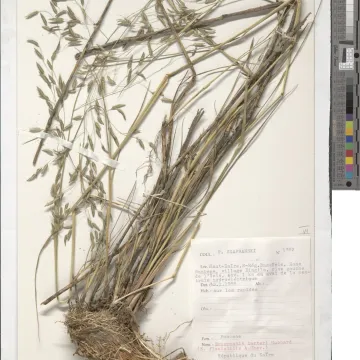
Eragrostis barteri
Eragrostis barteri
Description
Eragrostis barteri is an annual grass species belonging to the Poaceae family. Known for its resilience in tropical environments, this plant plays a significant role in local agricultural systems, particularly as a source of forage for livestock in regions where soil conditions may be challenging for more demanding cereal crops.
The native range of this species is primarily concentrated in the tropical regions of Africa. It has adapted to diverse landscapes, ranging from sandy riverbanks to open savannah-like areas. This geographical distribution highlights the plant's ability to thrive under high solar radiation and periodic moisture stress, making it a reliable performer in arid and semi-arid agricultural zones.
Botanically, Eragrostis barteri is characterized by its slender, erect stems and narrow, linear leaf blades. The root system is relatively fibrous and extensive, which is a key adaptation for nutrient uptake in nutrient-poor soils. The inflorescence is a loose, open panicle, typical of the genus, ensuring efficient wind pollination and successful seed dispersal across expansive landscapes.
Agronomic requirements for this crop focus on well-drained soil types. While it displays excellent drought tolerance once established, it responds significantly to nitrogen fertilization during the vegetative growth phase. Avoiding waterlogging is critical, as the species is highly susceptible to root rot if stagnant water remains in the root zone for extended periods.
- Excellent tolerance to high temperatures and drought.
- Fast growth cycle, facilitating multiple harvests per season.
- Adaptability to infertile, sandy, or degraded soils.
- Effective recovery capacity after harvesting or grazing.
The primary economic use of Eragrostis barteri is as a fodder crop. It provides high-quality biomass when harvested at the vegetative stage before the stems become overly lignified. Livestock, particularly cattle and sheep, find it palatable, and it serves as a valuable supplementary feed source in livestock farming operations throughout its cultivation range.
Regarding health management, the crop is generally hardy but can be susceptible to fungal diseases such as leaf rust and various leaf spot pathogens under high humidity conditions. Insect pests, including grasshoppers and specific stem-boring larvae, are the main threats. Control strategies include crop rotation and ensuring optimal stand density to reduce the susceptibility of the plants to pest outbreaks.
Photo gallery