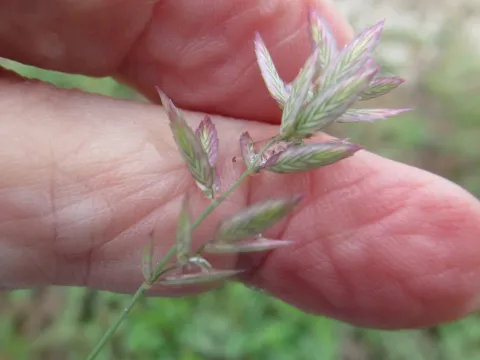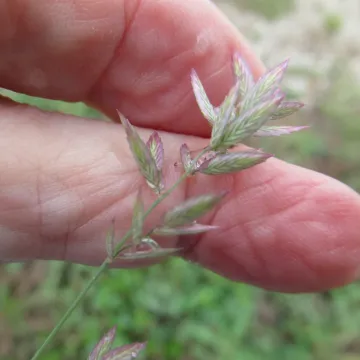

Beyrich's lovegrass
Eragrostis beyrichii
Description
Beyrich's lovegrass (Eragrostis beyrichii) is a perennial grass species belonging to the Poaceae family. This species is widely recognized for its robust nature and ability to thrive in harsh environments, making it a valuable asset for land rehabilitation and erosion control programs in semi-arid ecosystems.
Native to the southwestern regions of North America, including parts of the United States and Mexico, this grass is well-adapted to sandy and arid landscapes. Its natural distribution is characterized by sparse vegetation, where it plays a critical role in stabilizing fragile sandy soils that would otherwise be susceptible to wind erosion.
Botanically, the plant grows in dense, tufted clumps that provide shelter and surface protection. Its root system is particularly deep and expansive, allowing the grass to access deep soil moisture and nutrients that are unavailable to shallower-rooted species. The narrow, tough leaves are an evolutionary adaptation to arid climates, designed to conserve water throughout the growing season.
Agronomic requirements are centered around well-drained, sandy soils. The crop is remarkably low-maintenance, requiring no complex fertilization schemes or intensive irrigation once established. Planting is ideally timed with the onset of seasonal moisture to ensure adequate seedling vigor, after which the plant becomes largely self-sustaining in its native environment.
The primary economic use of Beyrich's lovegrass is in conservation and forage management. While it is not the most productive forage grass in terms of biomass, its ability to remain green and palatable during extreme heat makes it a reliable feed source when other grasses fail. Additionally, its resistance to pests and diseases makes it a low-risk inclusion in pasture improvement projects.
Photo gallery