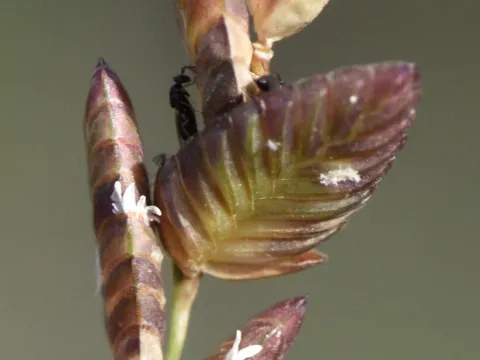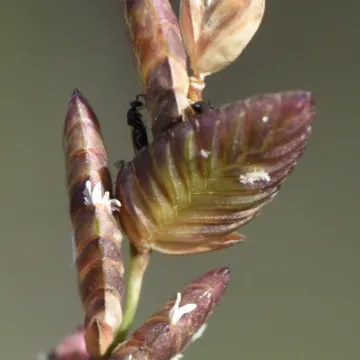
Cape lovegrass
Eragrostis capensis
Description
Cape lovegrass (Eragrostis capensis) is a perennial grass species belonging to the Poaceae family. In agronomy, it is recognized as a resilient forage plant, often utilized in grazing systems to provide steady biomass production in semi-arid and subtropical agricultural regions.
Originating from Southern Africa, this species has evolved in areas characterized by seasonal water scarcity and nutrient-poor soils. Its natural distribution is widespread across regions where it serves as a key element of the local grassland ecosystems, effectively supporting livestock production through its high adaptability to varying environmental stressors.
The botanical structure of Cape lovegrass features dense tufts and slender leaves, which are typical adaptations to its native environment. Its root system is exceptionally efficient at moisture uptake, which aids in soil stabilization and erosion control. The inflorescences are distinct panicles that produce numerous seeds, facilitating natural reseeding in established pastures.
Regarding climate and soil requirements, the species prefers well-drained soils and thrives in full sun. While it is drought-tolerant, optimal yields are achieved in soils with balanced fertility. Agronomic management involves maintaining appropriate grazing pressure, which prevents overgrazing and promotes the vegetative longevity of the grass stand throughout the growing season.
Economically, it is primarily used as high-quality forage for ruminants. Growers must be aware of common challenges to maintain healthy stands:
- Susceptibility to leaf rust under high humidity conditions.
- Infestations by specific grass-feeding pests during the active growing cycle.
- The necessity to manage weed encroachment through timely mowing or rotational grazing.
Photo gallery